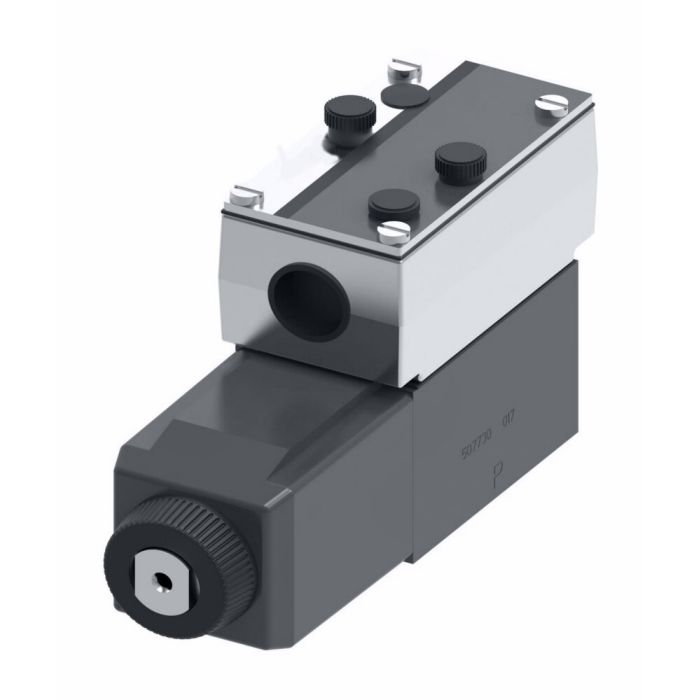
The VICKERS DG4V3S2BMFPBWB560 directional control valve is suitable for applications such as die casting, foundry work, machine tools, marine and offshore environments, presses, primary metal processing, paper mills, test equipment, simulation setups, and turbine control systems, including wind, steam, and water turbines.
This Vickers directional control valve features a three- or four-way design and is easily mounted on industry-standard surfaces. It is constructed with Buna-N seals and handles a flow rate of 80 liters per minute, with a power consumption of 30 watts.
SKU: 02-146311
Supplier Part Number (MPN): 02-146311
Loading related products…
Specifications
Alternate Part Numbers
Alternate Part NumberMINO-00900X45084
Application
Die casting & foundry, Machine tool, Marine/Offshore, Press, Primary metal, paper, Test equipment & simulation, Turbine control (wind, steam, water)
Brand
Danfoss (Power Solutions II LLC)
Brand
Vickers
Pack Size
1.00
UOM
EA
Features
Three- or four-way directional control|Easily mountable on industry-standard surfaces|Thousands of models to suit all applications
Flow Rate1
80 litre per minute
ICC
IV Directional Control Valves
Language
English
Net Pack Quantity Units
EA
Product Width
1.80
Seal Material
Buna-N
Special Features
None
Sub Brand
Vickers
Supplier Part Number
02-146311
Wattage
30
Product Weight
3.50 lbs
Product Questions & Answers (2)
Question by: Debbie W on Jun 9, 2025, 7:24 AM
Will this work okay on a machine tool application?
Answer by: Customer Support on Jun 11, 2025, 7:50 AM
This Vickers directional control valve is well-suited for machine tool applications, along with die casting, foundry work, and other industrial uses like presses and primary metal processing.
Question by: Lyle A on Oct 12, 2025, 11:56 AM
Flow rate on this one is listed at 80 liters per minute. That enough to handle a press application without starving the circuit?
Answer by: Customer Support on Oct 13, 2025, 6:51 PM
For press work, 80 liters per minute is a solid flow capacity and fits well within what most hydraulic press circuits require at the valve level. This model is explicitly listed for press applications, so it's not a stretch to put it there. Just make sure your system is sized to supply that flow consistently, because the valve itself won't be the bottleneck at typical press operating demands.