

Brand
Vickers by Danfoss
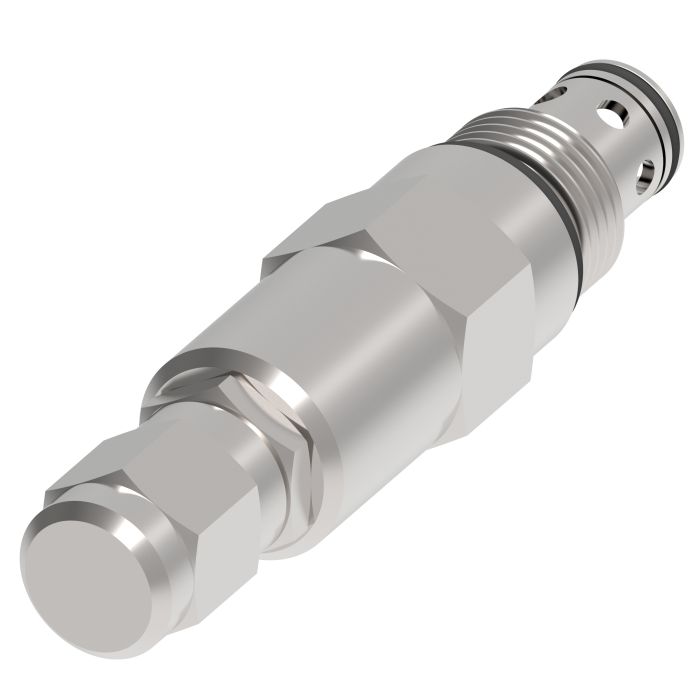
Rated for up to 350 bar (5,000 psi) and a flow capacity of 300 L/min (80 USgpm), the VICKERS RV5 16 C 0 30/5 is a spool-style pressure control valve built for demanding mobile and industrial hydraulic systems. Its compact footprint makes it well suited for installations where space is limited without sacrificing pressure handling capability.
Part of the Vickers by Danfoss/Eaton RV5-16 series, this valve is commonly applied in harvesters, refuse haulers, and a range of mobile and industrial equipment. The spool design contributes to reliable, consistent pressure regulation across varied duty cycles, and the valve's construction balances performance with economical serviceability.
SKU: 02-163927
Supplier Part Number (MPN): 02-163927
|
Brand
Vickers by Danfoss
|
Actuator Type
Pilot Operated
|
Adjustment Type
Cap
|
Cavity
C-16-2
|
Dimensions
4.12 in L x 1.5 in W x 1.5 in H
|
Domestic/Import
Import
|
Housing
Without Housing
|
Installation Type
Screw-In Cartridge
|
Nominal Size
#16
|
Number of Ports/Ways
2-Port
|
Port Type
Cartridge
|
Seal Material
Buna-N
|
Series
RV5-16 Series
|
Style
Spool
|
Tell us what you need and we'll get back to you.
Fields marked * are required.
Thanks — your inquiry's on its way