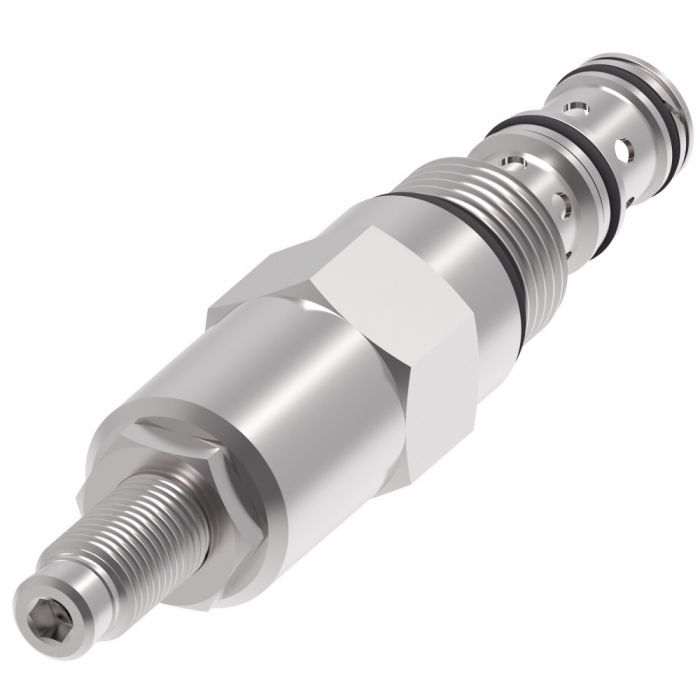
Designed for demanding mobile and industrial environments, the Vickers Flow Control is an adjustable, pressure-compensated flow regulator suited to applications including harvesters, refuse haulers, and a broad range of industrial equipment. The PFR2-10 Series is rated to 350 bar (5,000 psi) and handles flow up to 350 L/min (92 USgpm), with this configuration optimized for a nominal flow rate of 60 litres per minute.
Compact construction and reliable performance make it a practical choice where consistent flow regulation under varying pressure conditions is required. The pressure-compensated design maintains set flow regardless of load fluctuations, reducing the need for manual adjustment across changing operating conditions. Sourced from Vickers by Danfoss/Eaton, the valve reflects the reliability expected from that product line in mobile hydraulic circuits.
SKU: 02-165668
Supplier Part Number (MPN): 02-165668
Loading related products…
Specifications
Alternate Part Numbers
Alternate Part NumberMINO-00900X08279
Application
Harvesters, refuse haulers, mobile and industrial applications
Brand
Danfoss – Hydraulics
Brand
Vickers
Pack Size
1.00
UOM
EA
Features
350 bar (5000 psi) & 350 L/min (92 USgpm)|Perfect balance of pressure and flow|Reliable, economical and compact
Flow Rate1
60 litre per minute
ICC
SICV Flow Control Valves
Language
English
Net Pack Quantity Units
EA
Product Width
1
Style
Adjustable Pressure Compensated, Flow Regulator
Sub Brand
Vickers
Supplier Part Number
02-165668
Product Weight
0.54 lbs
Product Questions & Answers (1)
Question by: Lee W on Aug 20, 2025, 5:38 PM
what's the max pressure this flow control can handle, and is 60 L/min the only flow setting or can you dial it up or down?
Answer by: Customer Support on Aug 22, 2025, 6:57 AM
Rated to 350 bar (5,000 psi), so it's built for serious working pressure. The 60 litre per minute figure is the nominal flow rate for this particular configuration, but the valve itself is adjustable. Being pressure-compensated means it holds that set flow steady even when load pressure swings around, which cuts down on constant fiddling during operation.