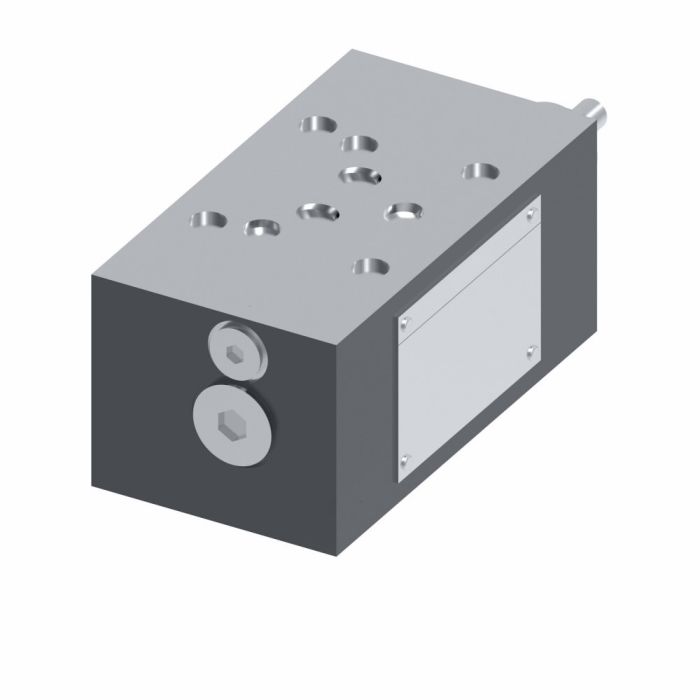
The Vickers DGMX2 5 PA BW E RC S 30 is a system stack valve designed for machine tool and various industrial applications. These Vickers valves are engineered to reduce installation costs and eliminate external leakage.
This directional control valve offers boosted resistance to contamination and a flow rate of 120 liters per minute. It features a Buna-N seal and measures 2.82 inches in width.
SKU: 02-330886
Supplier Part Number (MPN): 02-330886
Loading related products…
Specifications
Alternate Part Numbers
Alternate Part NumberMINO-00900X48764
Application
Machine tool and multiple industrial applications
Brand
Danfoss (Power Solutions II LLC)
Brand
Vickers
Pack Size
1.00
UOM
EA
Features
Reduce installation costs|Eliminate external leakage|Boost resistance to contamination
Flow Rate1
120 litre per minute
ICC
IV Directional Control Valves
Language
English
Product Width
2.82
Seal Material
Buna-N
Special Features
None
Sub Brand
Vickers
Supplier Part Number
02-330886
Product Weight
10.00 lbs
Product Questions & Answers (2)
Question by: Melvin R on Sep 14, 2025, 5:25 PM
flow rate on this unit is listed at 120 liters per minute -- is that enough for most machine tool setups or is it on the low end?
Answer by: Customer Support on Sep 16, 2025, 8:09 AM
For the majority of machine tool applications, 120 liters per minute is a solid working flow rate. Most standard machine tool circuits don't push beyond that threshold in normal operation, so this valve fits right into that range without being a bottleneck. If your system runs unusually high-demand cycles, you'd want to verify your peak flow requirements before committing, but for typical machine tool use this falls well within acceptable territory.
Question by: Gene K on Sep 17, 2025, 11:07 AM
Can this handle dirty hydraulic fluid, or do I need to be extra careful about filtration?
Answer by: Customer Support on Sep 19, 2025, 7:10 AM
Boosted resistance to contamination is one of the features of this directional control valve, so it should be more forgiving of less-than-perfect fluid cleanliness. However, best practices for hydraulic systems still apply.