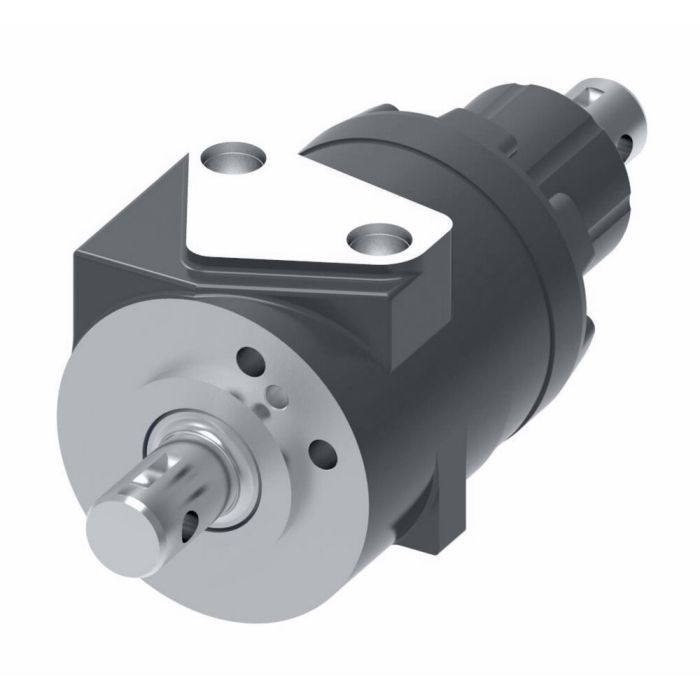
Designed for small turf care, utility, and on-highway vehicle applications, this Char-Lynn branded Danfoss / Eaton Torque Generator functions as a Steering Control Unit (SCU) suited to compact hydraulic steering systems. It operates within a flow rate range of 11 to 19 L/min (3 to 5 gal/min) and supports a maximum working pressure of 172 bar (2,500 psi).
The unit's compact design and moderate flow requirements make it a practical fit for light-duty mobile equipment where space and system capacity are limited. With a nominal flow rate of 11.4 LPM, it is well-matched to smaller steering circuits without excess capacity overhead.
SKU: 217-1052-002
Supplier Part Number (MPN): 217-1052-002
Loading related products…
Specifications
Alternate Part Numbers
Alternate Part NumberMINO-00162X91541
Application
Other
Brand
Danfoss Power Solutions II (Char-Lynn)
Brand
Char-Lynn
Pack Size
1.00
UOM
EA
Features
Flow Rate 11-19 L/min (3-5 gal/min)|Maximum pressure 172 bar (2,500 psi)|Small turf care, utility and on-highway vehicle applications
Flow Rate1
11.4 LPM
ICC
Steering Control Unit (SCU)
Language
English
Product Width
3.39
Special Features
None
Sub Brand
Char-Lynn
Supplier Part Number
217-1052-002
Product Weight
15.00 lbs
Product Questions & Answers (2)
Question by: Dean W on Jan 4, 2026, 9:45 AM
Reckon this would be alright for my little utility vehicle?
Answer by: Customer Support on Jan 6, 2026, 6:19 AM
Designed for small turf care, utility, and on-highway vehicle applications, this Char-Lynn branded Danfoss / Eaton Torque Generator should work well for that purpose.
Question by: Floyd D on Jul 9, 2025, 6:07 AM
Got a compact turf machine that needs a steering control unit -- what kind of flow and pressure is this torque generator actually rated for?
Answer by: Customer Support on Jul 10, 2025, 7:04 AM
Running at a nominal 11.4 LPM with a working range of 11 to 19 liters per minute, this unit tops out at 172 bar, which works out to 2,500 psi. For a compact turf or utility machine, that's right in the wheelhouse. The system doesn't demand a lot of flow overhead, so smaller hydraulic circuits handle it without being taxed.