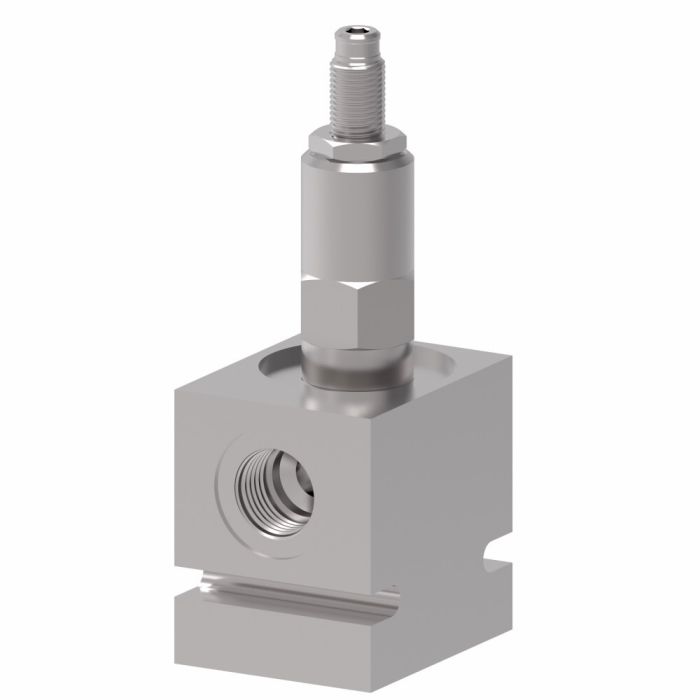
Designed for demanding mobile and industrial hydraulic circuits, the Vickers RV2-10-K-S-8T-50/50 is a poppet-style pressure control valve rated to 350 bar (5,000 psi) with a flow capacity of up to 300 L/min (80 USgpm). Its compact form factor makes it well suited for installations where space is limited, including harvesters, refuse haulers, and a broad range of mobile equipment.
Part of the Vickers by Danfoss RV2-10 series, this valve features a 1/2" port size and delivers reliable pressure regulation in both mobile and stationary industrial applications. The poppet construction contributes to consistent sealing performance and long service life across variable duty cycles. Its design balances application flexibility with a minimal installation footprint.
SKU: 307AA00410A
Supplier Part Number (MPN): 307AA00410A
Loading related products…
Specifications
Alternate Part Numbers
Alternate Part NumberMINO-00900X13702
Application
Harvesters, refuse haulers, mobile and industrial applications
Brand
Danfoss – Hydraulics
Brand
Vickers
Pack Size
1.00
UOM
EA
Features
350 bar (5000 psi) & 300 L/min (80 USgpm)|Reliable, economical and compact|Maximum flexibility and minimum space
Flow Rate1
114 litre per minute
ICC
SICV Pressure Control Valves
Language
English
Port Size
1/2"
Product Width
3.50
Style
Poppet
Sub Brand
Vickers
Supplier Part Number
307AA00410A
Product Weight
1.31 lbs
Product Questions & Answers (1)
Question by: Marvin R on Feb 24, 2026, 8:17 AM
Got a refuse hauler that needs a pressure control valve and space is real tight around the mounting area, this a compact enough unit to work in that kind of setup?
Answer by: Customer Support on Feb 25, 2026, 12:17 PM
Compact installation is one of the core strengths of the RV2-10 series. The design was built with minimum footprint in mind, which is exactly why it shows up in refuse haulers and harvesters where space around the hydraulic circuit gets eaten up fast. The 1/2 inch port size keeps the hydraulic connections manageable too, so fitting it into a tight bay is generally straightforward.