

Brand
adapt-all
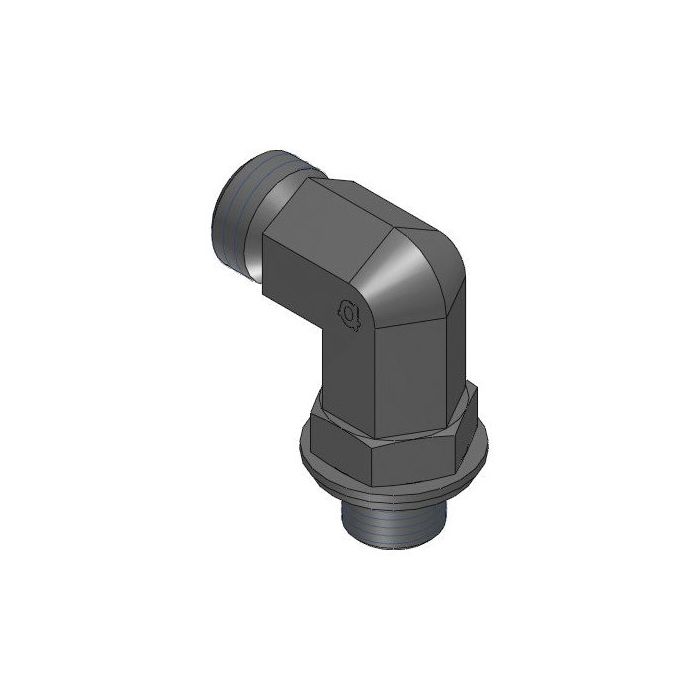
Manufactured from steel, this 90° elbow fitting connects a DIN tube end (M16 x 1.5 thread) to a male BSPP port (G 1/4 - 19), making it a practical solution for routing hydraulic lines at a right angle where space or layout constraints require a directional change. The adjustable design allows the DIN side to be oriented as needed before final tightening, supporting flexible installation in tight assemblies.
The 90* Din X Male Bspp Adj Elbow is an Adaptall fitting, with a body profile suited to compact hydraulic circuits. Key dimensions include a 22mm L1 length, 32mm L3 length, and wrench flats of 14mm and 19mm across the two connection sides. Side 1 carries a size designation of L10; Side 2 connects to a 1/4" BSPP male port.
SKU: 5059L-10-04
Supplier Part Number (MPN): 5059L-10-04
|
Brand
adapt-all
|
Connection Size 2
1/4 in
|
Connection Type
Male BSP, Male Metric
|
Connection Type 1
Male Metric DIN 24 deg Tube
|
Connection Type 2
Male BSPP
|
Dimension Standards
BS 5200, DIN 2353
|
Finish
Zinc-Plated
|
Fitting Type
90 deg Elbow
|
Material
Steel
|
Material Construction
Carbon Steel
|
Series
5059 Series
|
Thread Size
M16x1.5 x 1/4-19
|
Tell us what you need and we'll get back to you.
Fields marked * are required.
Thanks — your inquiry's on its way