

Brand
Aeroquip® by Danfoss
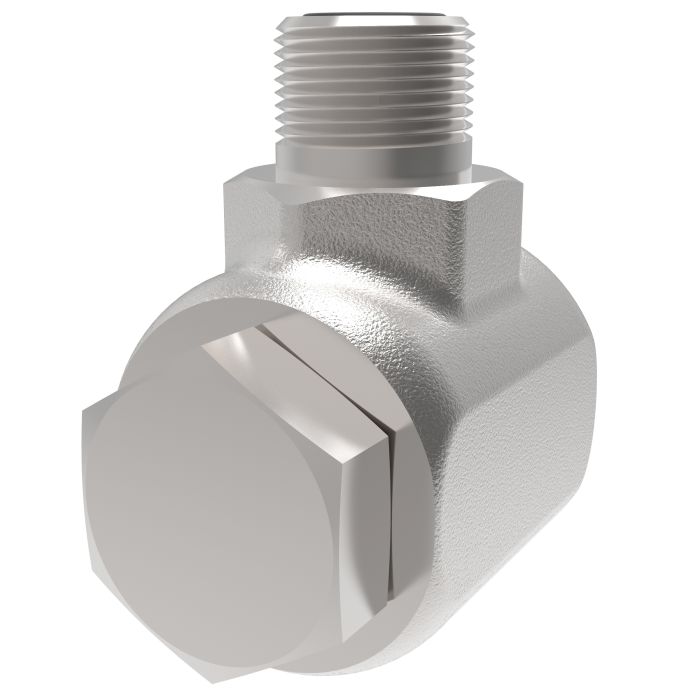
Designed for 90-degree swivel applications in hydraulic systems, the Danfoss / Eaton Aeroquip FS65 Series Swivel Joint connects a 1-inch SAE 37 (JIC) male end to a 1-inch O-Ring Boss male end, providing rotational flexibility while maintaining a secure, leak-resistant seal.
Constructed from steel, this swivel joint carries a torque rating of 17 in-lbs and is rated for a minimum working temperature of -40°F, making it well-suited for demanding industrial environments. The 1.625-inch hex on the ORB end allows for straightforward installation with standard tooling.
With a package weight of 3.1 lbs, this is a complete swivel joint assembly under the Eaton Aeroquip product line, classified under the FS65 series. Typical applications include mobile hydraulic equipment, industrial machinery, and other fluid power circuits where controlled swivel movement and reliable end connections are required.
SKU: FS65009-1616-01
Supplier Part Number (MPN): FS65009-1616-01
|
Brand
Aeroquip® by Danfoss
|
Connection Size 1
1 in
|
Connection Size 2
1 in
|
Connection Type
Male JIC, Male SAE ORB
|
Connection Type 1
Male SAE 37 deg JIC
|
Connection Type 2
Male SAE ORB
|
Dimension Standards
SAE J1176
|
Dimensions
3.86 in L x 3.68 in H
|
Finish
Zinc-Plated
|
Fitting Type
Swivel Joint
|
Hex Size
1-5/8 x 1-11/16 in
|
Material
Steel
|
Material Construction
Carbon Steel
|
Maximum Operating Pressure
3000 psi
|
nmfc
50
|
Operating Temperature
-40 to 250 deg F
|
Seal Material
Buna-N
|
Segment Code
C
|
Series
FS6500 Series
|
Thread Size
1-5/16-12
|
Tell us what you need and we'll get back to you.
Fields marked * are required.
Thanks — your inquiry's on its way