

Brand
WEBTEC
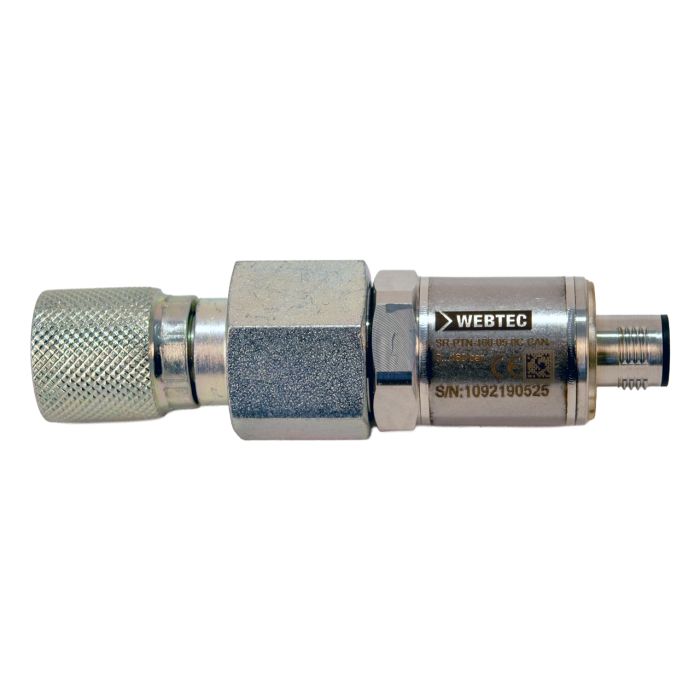
Designed for integration with HPM CAN data loggers, the WEBTEC SR-PTN-160-05-0C-CAN pressure transducer offers reliable measurement capabilities up to 160 bar (2300 psi). It maintains an impressive pressure accuracy of ±0.5% full scale, ensuring precise readings in demanding conditions. The transducer operates effectively within fluid temperature ranges of -25 to 105 °C (-13 to 221 °F) and ambient temperatures from -25 to 85 °C (-13 to 185 °F), making it suitable for a wide range of hydraulic environments.
Constructed from durable stainless steel, the SR-PTN-160-05-0C-CAN features a robust M16 x 2 test point connector for secure installation, while the M12 5-Pin Code A electrical connection facilitates seamless integration. Its IP54 rating ensures protection against dust and water ingress, and the FKM seals offer chemical resistance when used with compatible fluids like mineral oils to ISO 11158 standards. With a lightweight design at 0.16 kg (0.35 lbs) and powered by a 7-15 V DC supply, it is a versatile addition to any hydraulic measurement setup.
SKU: FT10649-160
Supplier Part Number (MPN): SR-PTN-160-05-0C-CAN
|
Brand
WEBTEC
|
Brand
Webtec
|
Pack Size
1.00
|
UOM
EA
|
Supplier Part Number
FT10649-160
|
Pressure Accuracy
±0.5% Full Scale
|
Ambient Temperature
-25 to 85 °C, -13 to 185 °F
|
Body Materials
Stainless steel 1.4303
|
Compatible Fluid
Mineral oils to ISO 11158 (other fluids on request)
|
Connection Type
M12 5-Pin Code A
|
Fluid Temperature Range
-25 to 105 °C, -13 to 221 °F
|
Gross Weight
0.16 kg, 0.35 lbs
|
Internal Materials
Stainless steel wetted parts
|
IP Rating
IP54
|
Max Rated Pressure
160 bar, 2300 psi
|
Net Weight
0.16 kg, 0.35 lbs
|
Porting
M16 x 2 test point connector
|
Power Supply
7 – 15 V DC
|
Seals
FKM
|
Product Weight
0.99 lbs
|
Tell us what you need and we'll get back to you.
Fields marked * are required.
Thanks — your inquiry's on its way