
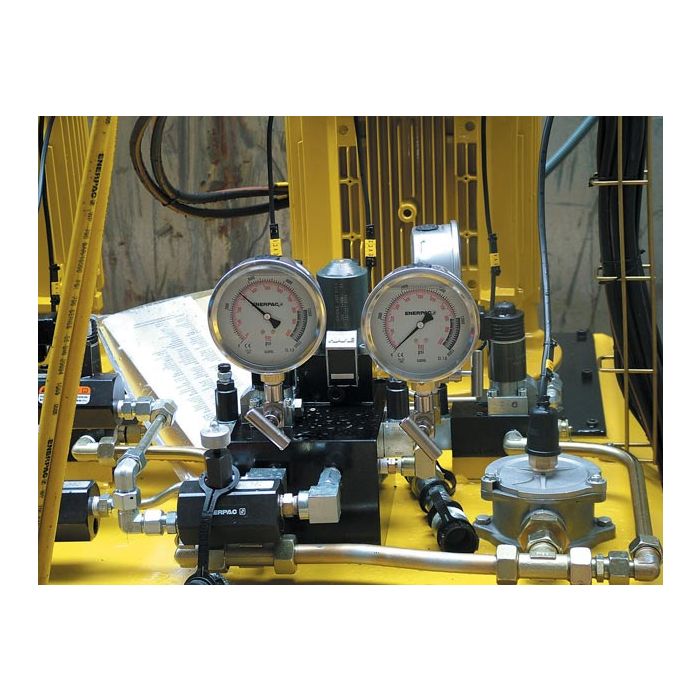
The Enerpac G-Series Hydraulic Pressure Gauge with a 4.0-inch face and a lower mount design is engineered for high-performance pressure monitoring in demanding environments. This gauge is glycerin-filled, providing essential protection to pressure sensing components against vibration, sudden pressure fluctuations, and moisture ingress. Its dual scale display offers clear readings in both psi and bar, making it versatile for various industrial applications. With a maximum operating pressure of 10,000 psi (700 bar), it is suitable for high-pressure systems. For optimal performance in high-cycle applications, the use of gauge snubbers or needle valves is recommended, ensuring longevity and accuracy.
Constructed with a safety blow-out disk and pressure equalizing membrane, this gauge ensures user safety and reliability. It is an ideal choice for hydraulic systems requiring precise pressure monitoring and durability under intense conditions. The Enerpac G-Series is a trusted solution for professionals seeking dependable pressure measurement tools.
gauge says glycerine filled -- does that actually help when you're running a system that hammers pretty hard or is it mostly just for looks?
Answer by: Customer Support on Dec 19, 2025, 3:24 PM
Glycerine filling makes a real difference on systems with heavy vibration or pressure spikes. It dampens the movement inside the gauge so the needle isn't constantly bouncing around, and it keeps moisture from getting into the sensing components. On a hard-cycling system though, the glycerine alone may not be enough. The product notes specifically recommend pairing it with a gauge snubber or needle valve when you're running high-cycle applications, so that's worth factoring into your setup.
Question by: Curt M on Jul 16, 2025, 8:18 PM
got a hydraulic setup that shakes a fair bit, is this gauge gonna hold up or will it beat itself to death
Answer by: Customer Support on Jul 18, 2025, 6:25 PM
With the glycerin fill, the pressure sensing parts are sealed and dampened to help protect them from vibration, sudden pressure changes, and moisture. That setup is meant to extend gauge life in rougher running hydraulic systems.