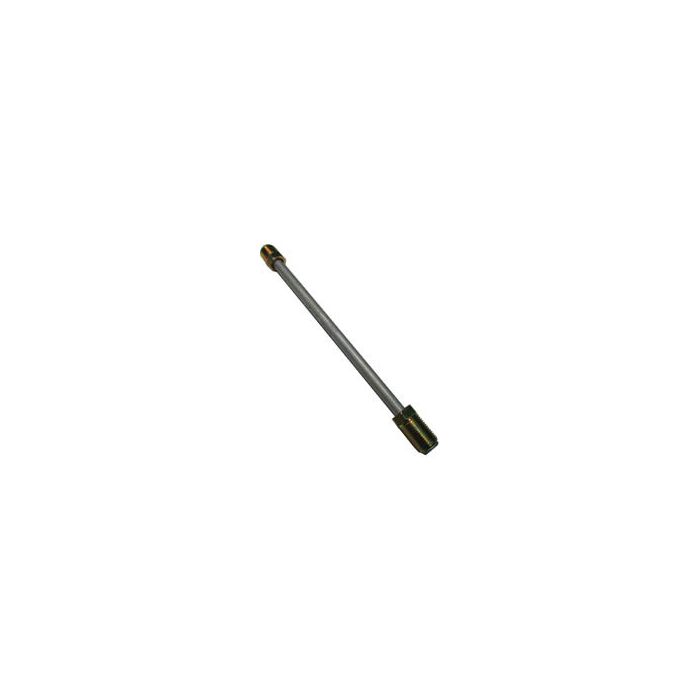
Designed for left-hand brake line configurations, this banjo fitting from Brakequip connects a 7/16-inch line to a 9/16-inch port, making it a practical solution for automotive and light commercial brake system assembly or repair. The banjo-style design allows fluid passage through a hollow bolt arrangement, which is standard in brake line routing where a compact, low-profile connection is required at calipers, wheel cylinders, or master cylinders.
The Brakequip Fitting - Banjo 7/16 x 9/16 (Left) is suited for applications where directional orientation of the fitting exit matters, and the left-hand designation ensures correct alignment in installations where a right-hand fitting would result in line interference or improper routing angle.
SKU: HFB122
Supplier Part Number (MPN): HFB122
Alternate Part Numbers: MI-08749864, MINO-11456X20063
Loading related products…
Specifications
Alternate Part Numbers
Alternate Part NumberMI-08749864, Alternate Part Number MINO-11456X20063
Brand
Brakequip, LLC
Brand
Brakequip
Pack Size
1.00
UOM
EA
Supplier Part Number
HFB122
Product Weight
0.21 lbs
Product Questions & Answers (2)
Question by: Floyd P on May 25, 2025, 5:42 PM
got a brake setup that needs the line to come off the left side, is this the right banjo fitting for that?
Answer by: Customer Support on May 27, 2025, 1:31 PM
For left-hand brake line routing where the exit direction matters, this Brakequip banjo fitting is made for that left-hand orientation so the line lays out correctly instead of fighting the caliper or nearby parts.
Question by: Curt M on Jan 25, 2026, 9:18 PM
Got a brake line that keeps fouling up against the caliper bracket when I run a standard fitting, would this left-hand version sort that out?
Answer by: Customer Support on Jan 27, 2026, 6:45 AM
Left-hand orientation is exactly what fixes that kind of routing conflict. When a right-hand fitting forces the brake line into a bracket or creates a bind at the caliper, swapping to this left-hand banjo lets the line exit at the correct angle without fighting the surrounding hardware. The 7/16-inch line side connects to a 9/16-inch port, so as long as those sizes match your setup, the directional change alone is usually enough to clear the interference.