
Ball Material
Stainless Steel
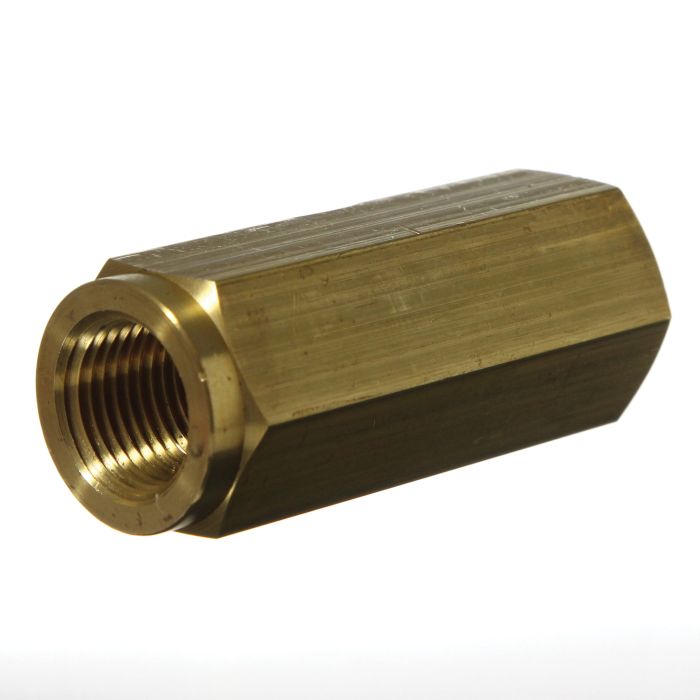
The Brass Inline Hydraulic Check Valve Female 1/4-18 NPT Ports PSI Cracking Pressure Up to 6.00 GPM & 2000.00 PSI is a high-performance component designed for pneumatic and lower pressure hydraulic systems. Featuring a maximum operating pressure of 2000 PSI and a rated flow of up to 6 GPM this valve ensures reliability in industrial environments.
This check valve facilitates free flow in the direction of the arrow while providing a positive check in the opposite direction making it essential for maintaining optimal fluid dynamics. Crafted from durable brass the valve offers robust performance while the stainless steel ball and spring enhance longevity.
The valve's low pressure differential requirement for opening and closing ensures efficient operation. The 1/4-18 NPT ports contribute to seamless integration within various systems simplifying the installation process.
With a maximum operating temperature of 200F the valve is versatile for different industrial applications. Additionally the Delrin ball follower and stainless steel retainer provide added durability and reduced maintenance requirements.
Supplier Part Number: EC20B
MPN: C1CN89
|
Ball Material
Stainless Steel
|
Body Material
Brass
|
Configuration
In-Line
|
Connection Type
FNPT
|
Disc Material
Stainless Steel
|
e Dimensions
3/4 in
|
End Type
Female
|
Nominal Size
1/4 in
|
Port Type
NPTF
|
Seal Material
FKM
|
Softgoods Material
FKM
|
Trim Material
Stainless Steel
|
Tell us what you need and we'll get back to you.
Fields marked * are required.
Thanks — your inquiry's on its way