
a Dimensions
0.94 in
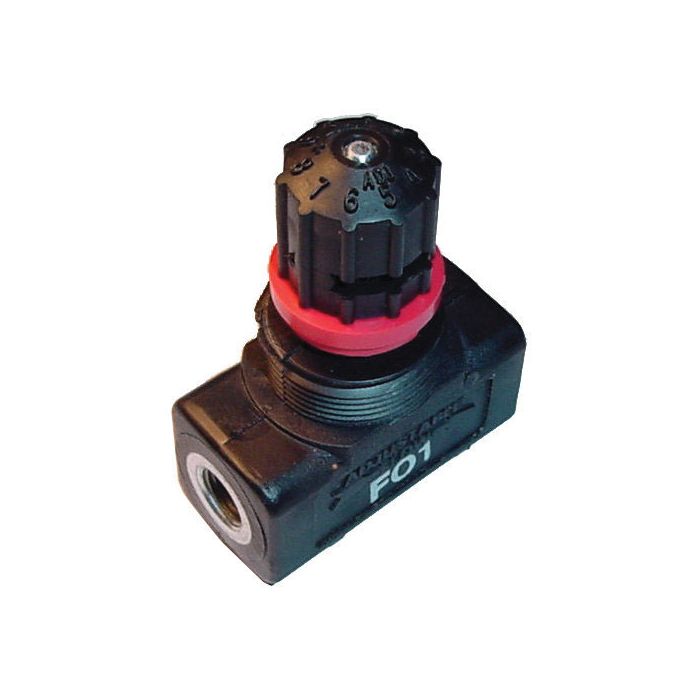
The Inline Pneumatic Flow Control Valve is engineered for controlled flow in one direction with free flow in the opposite direction. Constructed with a composite body it offers durability and resistance against corrosion. This model includes a color-coded micrometer and calibrated adjustment knob allowing for precise and repeatable settings.
Designed with a four-stage tapered needle this valve provides infinite control settings. With a maximum operating pressure of 200 PSI and a temperature range between 0 to 200F it is suitable for various industrial environments. The threaded units allow for easy panel mounting.
Safety is enhanced with a red locking ring that prevents undesired adjustments and a tamper-resistant wire included in the package.
MPN: 104104-F02
Supplier Part Number: 104104-F02
|
a Dimensions
0.94 in
|
b Dimensions
1.34 in
|
c Dimensions
2.83 in
|
Connection Type
NPT
|
d Dimensions
0.94 in
|
e Dimensions
1.91 in
|
Media
Air
|
Nominal Size
1/4 in
|
Number of Ports/Ways
3
|
Number of Stages
4
|
Thread 1
1-20 UNEF-2A
|
Tell us what you need and we'll get back to you.
Fields marked * are required.
Thanks — your inquiry's on its way