
Cylinder Type
Single-Acting
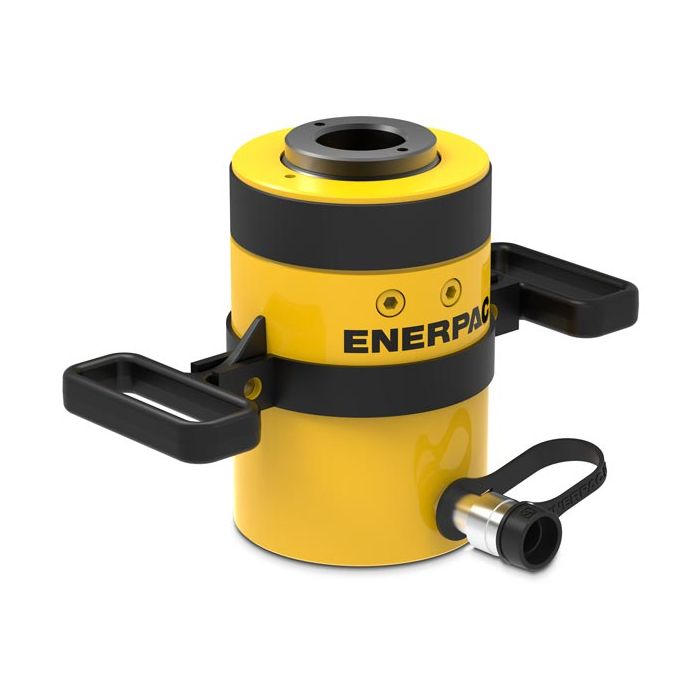
Designed with precision the 63.6 ton Capacity 3.00 in Stroke Single-Acting Hollow Plunger Hydraulic Cylinder is essential for high-force hydraulic applications. Its hollow plunger configuration ensures versatility suitable for both pushing and pulling tasks.
This component from Enerpac is built to rigorous standards promising durability in challenging industrial environments. The single-acting mechanism simplifies use providing dependable performance.
The cylinder's robust 63.6-ton capacity combined with a 3.00-inch stroke caters to tasks requiring significant power. Engineered without adjustable ends it integrates seamlessly into existing high-force systems.
Compact and reliable this hydraulic cylinder is a staple for professionals aiming for efficiency and precision in demanding applications.
Supplier Part Number: RCH603
|
Cylinder Type
Single-Acting
|
Finish
Baked Enamel
|
Material
Steel
|
Maximum Operating Pressure
10000 psi
|
Mounting Type
Base
|
Number of Mounting Holes
2
|
Plunger Type
Hollow
|
Return Type
Spring
|
Series
RCH Series
|
Tell us what you need and we'll get back to you.
Fields marked * are required.
Thanks — your inquiry's on its way