
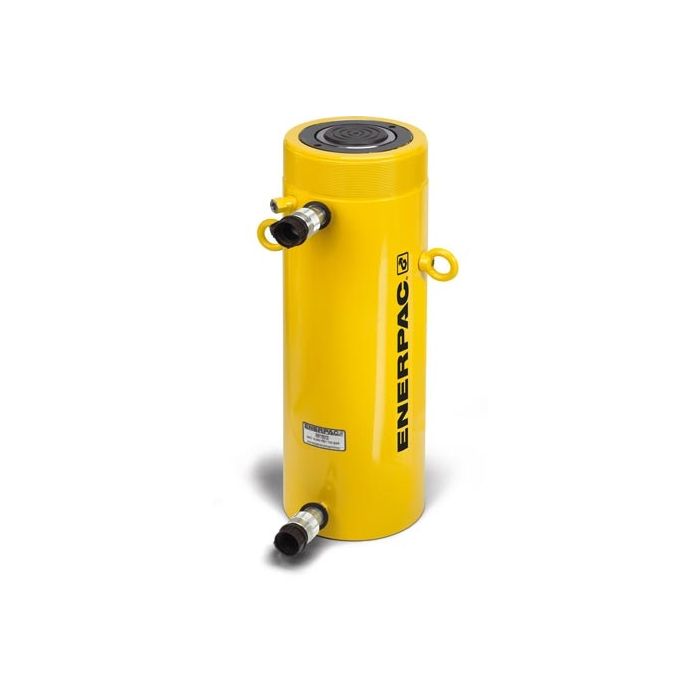
For demanding applications requiring precise control, the 32.5-ton capacity Enerpac double-acting hydraulic cylinder is an ideal choice. Featuring an 8.25-inch stroke, this RR-Series cylinder is designed for high-cycle use in industrial settings. The robust construction includes a collar thread, plunger thread, and base mounting holes for versatile mounting options. A removable saddle protects the plunger during operation, while the built-in safety valve prevents over-pressurization. The cylinder is engineered to handle a maximum operating pressure of 10,000 psi (700 bar), ensuring reliable performance under heavy loads.
Enerpac's RR-Series is known for its versatility, and this model is no exception. With a cylinder bore diameter of 2.88 inches and a weight of 40 lbs, it offers a compact yet powerful solution for construction and manufacturing needs. The baked enamel finish enhances corrosion resistance, extending the life of the equipment. A plunger wiper reduces contamination, ensuring longevity and consistent performance. This cylinder is compatible with various accessories for tailored applications, making it a valuable addition to any hydraulic system.
Need a cylinder that’ll pull back under power too, not just spring return. Is this RR-308 double-acting?
Answer by: Customer Support on Apr 16, 2026, 12:27 PM
With the RR-Series, hydraulic pressure is used to control both the advance and the retract, so you get powered return and more precise control of plunger speed in both directions.
Question by: Jean O on Nov 1, 2025, 1:10 PM
Got a job that needs some back-and-forth cycling on a press fixture, does this cylinder actually retract under hydraulic power or does it spring back?
Answer by: Customer Support on Nov 3, 2025, 7:46 AM
Full hydraulic control on both directions. The RR-308 is double-acting, meaning hydraulic pressure drives the plunger out and pulls it back in. That gives you precise speed control on the retract stroke, which matters a lot when you're running repeated cycles on a press or fixture setup. Spring-return cylinders can't match that kind of control, especially over a longer run of cycles.