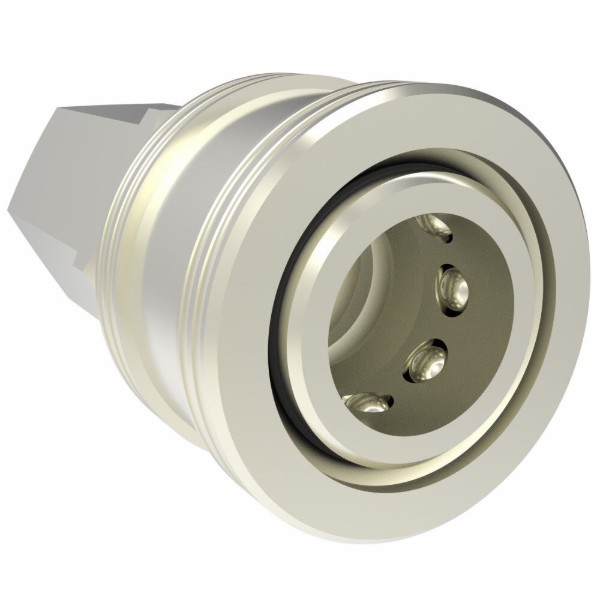
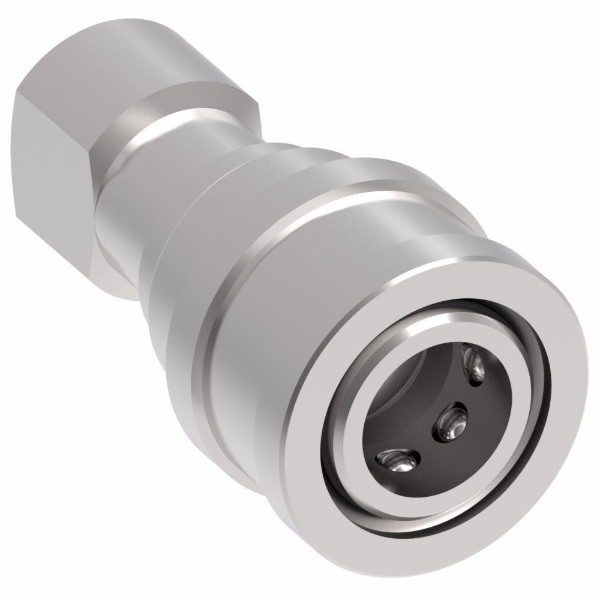
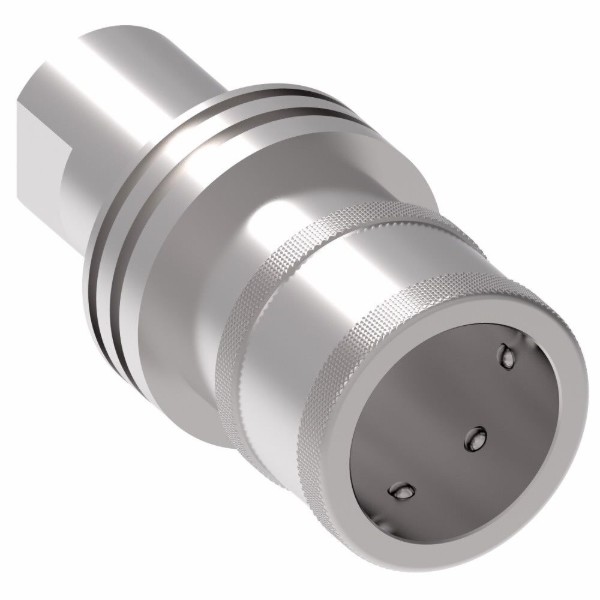
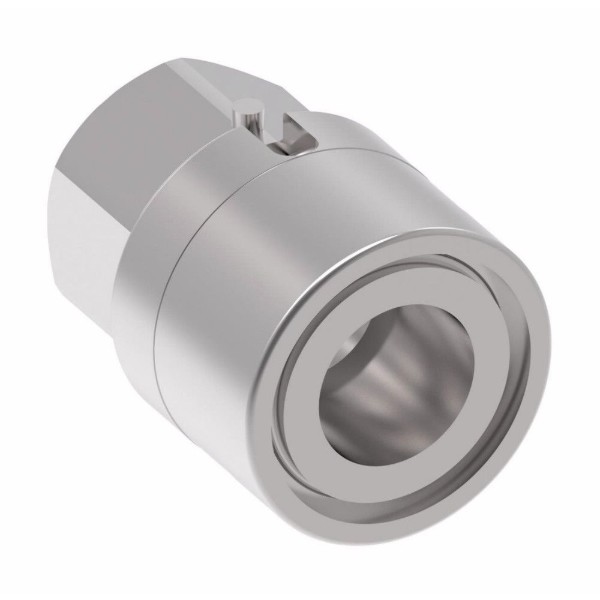
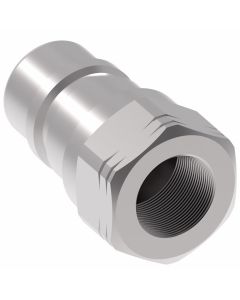
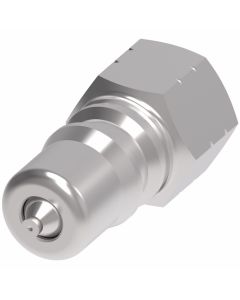
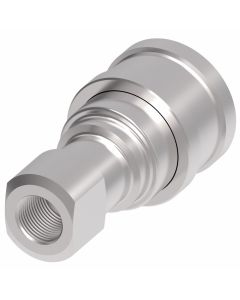
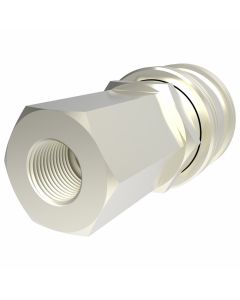
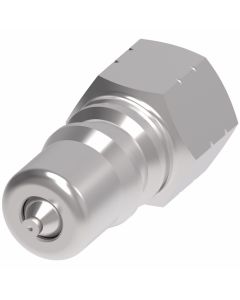
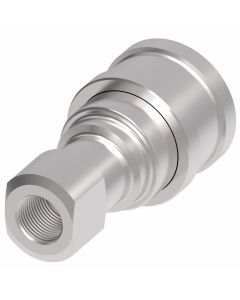
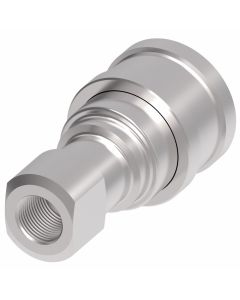
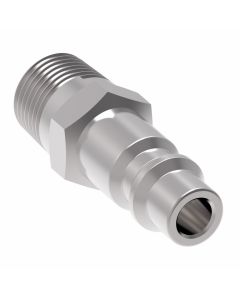
HSC stocks a comprehensive selection of quick disconnect couplers — industrial interchange air couplers, flat-face and poppet hydraulic disconnects, and agricultural implement couplings. Our specialists match the right coupler series and port size to your fluid, pressure, and flow requirements.
Huge In-Stock Inventory Same-Day Shipping Top Industry Brands
Match coupler series to the fluid, verify interchange compatibility, and size the body to the flow requirement so the coupler is not a bottleneck or a failure point.
Match the Coupler Series to the Application’s Fluid and PressureQuick disconnect coupler series are not interchangeable between applications. Air interchange couplers are designed for compressed air at shop pressures — they are not rated for hydraulic fluid under hydraulic working pressures. Hydraulic quick disconnects are rated for fluid pressure, typically between 2,500 and 5,000 PSI depending on the series and size, and use seal materials compatible with hydraulic oils rather than compressed air lubrication. Agricultural farm couplers are designed specifically for the tractor-to-implement connection — with connect-under-pressure capability and the seal geometry of the ISO 7241 standard used across tractor manufacturers. Using an air coupler in a hydraulic circuit or an agricultural coupler in an industrial hydraulic system creates a mismatch between seal materials, pressure ratings, and locking mechanisms.
Confirm Interchange Compatibility Before Mixing BrandsIndustrial interchange air couplers and hydraulic interchange couplers are manufactured to published interchange standards — meaning a plug from one manufacturer will engage a body from another if both are made to the same interchange series. However, not all couplers marketed as “interchange” are truly interchangeable across all manufacturers. Verify that the interchange series designation (MIL-C-4109, industrial interchange, ISO 7241 Series A or B) matches between the plug and body before committing to a mixed installation. A mismatched coupler that appears to engage but does not lock fully will release under pressure.
Select Port Size and Style to Match the Circuit Flow RequirementQuick disconnect couplers create a restriction in the fluid circuit — the coupler’s internal bore and poppet valve geometry limit flow capacity. For compressed air tool connections, an undersized coupler body (common in 1/4″ body couplers) starves tools requiring higher SCFM, reducing tool performance at the point of connection. For hydraulic circuits, coupler pressure drop under flow reduces actuator force and speed. Select the coupler body size whose rated flow capacity meets or exceeds the circuit’s SCFM or GPM requirement at operating pressure, and match the port thread size to the hose fitting or component port at the connection point.
Hydraulic failures never happen at a good time. One moment, your system is running smoothly — the next, it’s leaking fluid, overheating, or grinding to a halt. Downtime doesn’t just stall productivity;…
Hydraulic motors are critical components in fluid power systems, converting hydraulic energy into mechanical energy to drive equipment. Whether it's powering a conveyor in a factory, rotating an auger…
Choosing the Right Hydraulic Pump for Maximum Performance
Hydraulic pumps play a vital role in hydraulic systems by converting mechanical energy into hydraulic power. They are responsible for moving fluid…
HSC works with industries that depend on reliable hydraulic and pneumatic systems, providing access to in-stock components, service capabilities, and knowledgeable support across diverse applications.
Quick disconnect couplers are the connection points where operational speed meets the physical reality of equipment servicing. In construction and agriculture, flat-face hydraulic couplers allow operators to swap implement circuits with no spill and no air entrainment. In manufacturing, industrial interchange air couplers connect pneumatic tools to air supply at every workstation. In agriculture, ISO and Pioneer-style couplers connect tractor remote circuits to implement control valves. HSC stocks quick disconnect couplers for compressed air, hydraulic, and agricultural applications.
Quick Disconnect Components Matter
A quick disconnect that fails under pressure doesn’t give a slow warning — it releases suddenly, spraying fluid, dropping system pressure, and potentially causing injury. Couplers that meet ISO and SAE interchange standards hold rated working pressure, seal reliably on both halves when disconnected, and release smoothly. HSC stocks Aeroquip, Dixon, and compatible quick disconnect couplers in the port sizes and body materials needed for air, hydraulic, and agricultural applications.
Frequently Asked Questions
What is the difference between industrial interchange and non-interchange quick disconnect couplers?
Industrial interchange couplers are manufactured to a published dimensional standard — MIL-C-4109 for air couplers, or ISO 7241 for hydraulic couplers — so that plugs and bodies from different manufacturers engage reliably. A Milton plug engages a Lincoln body; a Snap-tite agricultural plug engages an Aeroquip FD72 body. Non-interchange couplers use proprietary geometry — the plug only engages the matching body from the same manufacturer and series. Interchange couplers allow flexibility across a mixed installed base; non-interchange couplers require matched sets throughout the system.
Can I connect a compressed air quick disconnect to a hydraulic circuit?
No. Air interchange couplers are designed for compressed air at shop pressures (90–175 PSI) and use seal materials optimized for dry or lubricated compressed air — not hydraulic fluid. Hydraulic quick disconnects are rated for hydraulic working pressures (typically 2,500–5,000 PSI or higher) and use seal materials compatible with hydraulic oil. Using an air coupler in a hydraulic circuit will result in seal degradation, coupler failure under pressure, and potential fluid release. Always use a coupler series rated for the fluid and pressure of the circuit it serves.
What does “connect under pressure” mean on agricultural quick disconnects?
Connect-under-pressure (CUP) agricultural couplers are designed to allow the male plug to be engaged into the female body while the tractor hydraulic circuit is at operating pressure — without requiring the operator to relieve pressure at the outlet before connecting. Standard quick disconnects require zero differential pressure to engage — the circuit must be depressurized before coupling. CUP couplers use internal geometry that allows engagement against residual or trapped pressure, making implement hookup faster and eliminating the extra step of pressure relief at the tractor. Aeroquip FD72 Series is the standard CUP coupler for agricultural applications.
How do I know when a quick disconnect coupler needs to be replaced?
Key wear indicators: visible fluid seeping at the connection when engaged under pressure (indicates worn poppet seals); difficulty engaging or releasing the plug (indicates worn locking balls or a distorted body); audible air or fluid leak at the coupler under pressure; and excessive fluid loss at disconnection beyond what the coupler design allows. For hydraulic farm couplers, if an implement loses pressure or cycles slowly with no other apparent cause, the quick disconnect coupler is a common first suspect after hoses and valve settings have been verified.
Does HSC stock quick disconnect couplers for same-day pickup or shipping?
HSC stocks air interchange, hydraulic fluid transfer, agricultural farm, and specialty quick disconnect couplers from Aeroquip, Dixon, and other trusted manufacturers across standard body sizes and port configurations. Same-day shipping is available on orders placed before 2pm EST, and with 40+ branch locations throughout the Southeast, there is likely an HSC store near you with the quick disconnect coupler you need already on the shelf.