
-
All Products
- Hydraulic Power Systems & Components
- Shop all
- Hydraulic Pumps & Accessories
- Hydraulic Motors & Accessories
- Hydrostatic Transmissions
- Cylinders & Accessories
- Steering Units & Accessories
- Hydraulic Valves & Accessories
- Shop all
- Ball Valves
- Check Valves
- Check Valves (Pilot-Operated)
- Counterbalance Valves (Overcenter Valves)
- Cushion Valves (Double Relief Valves)
- Directional Control Valves
- Flow Control Valves
- Flow Divider Valves
- Gate Valves
- Logic Element Valves
- Needle Valves
- Plug Valves
- Pressure Reducing Valves
- Relief Valves
- Sandwich Valves
- Premium Selector Valves
- Slip-In Cartridge Valves
- Premium Stack Valves
- System Accessory Valves
- Premium Truck Valves
- Valve Accessories
- Electronic Control Components
- Pressure Sequence Valves
- Screw-In Cartridge Valves
- Motion Control Valves
- Shop Logic Element Valves
- Unloading Valves
- Drain Valves
- Hydraulic Filters & Accessories
- Power Units
- System Accessories
- High Force Hydraulics
- Pneumatic Power & Control
- Shop all
- Pneumatic Cylinders
- Pneumatic Valves & Accessories
- Pneumatic Air Line Filter, Regulator, & Lubicator (FRL's)
- Pneumatic Air Line Filters
- Premium Air Tool Hose Assemblies
- Air Line Lubricating Oil
- Safety Pop-Off Valves
- Pneumatic Air Line Filter & Regulator
- Pneumatic Air Line Filter Accessories
- Pneumatic Air Line Lubricators
- Pneumatic Air Tools
- Pneumatic Air Line Filter, Regulator, & Lubricator (FRL's)
- Pneumatic Air Line Regulators
- Pneumatic Cylinder Accessories
- Fluid Conveying
- Shop all
- Hose Products
- Tubing Products
- Piping Products
- Adapters
- Shop all
- Steel
- Shop all
- O-Ring Face Seal Braze Adapters
- O-Ring Face Seal To Straight Thread O-Ring
- O-Ring Face Seal To Pipe
- O-Ring Face Seal To 37° Flare
- O-Ring Face Seal To O-Ring Face Seal
- O-Ring Face Seal Accessories
- Pipe To Pipe
- Pipe to 37° Flare
- Pipe To Straight Thread O-Ring
- Pipe To Hose
- 37° Flare Union
- Straight Thread O-Ring to 37° Flare
- Straight Thread O-Ring to Straight Thread O-Ring
- Straight Thread O-Ring to Hose
- SAE Split Flange To 37° Flare
- SAE Split Flange To O-Ring Face Seal
- Braze & Weld to 37° Flare
- 42° Inverted Flare to 37° Flare
- Restrictor
- Metric to 37° Flare
- Metric to Pipe
- Metric
- BSPP to 37° Flare
- BSPP to Pipe
- BSPP to Metric
- BSPP to BSPT
- BSPP
- BSPT To Pipe
- BSPT To 37° Flare
- JIS
- JIS 30° Seat (BSPP Thread) To 37° Flare
- Komatsu, Kobelco
- BSPP to 37 deg Flare
- BSPT To JIS
- 37 deg Flare Union
- Pipe to 37 deg Flare
- Straight Thread O-Ring to 37 deg Flare
- O-Ring Face Seal To BSPP
- SAE Split Flange To 37 deg Flare
- Straight Thread O-Ring to Metric
- Metric to 37 deg Flare
- Straight Thread O-Ring to Pipe
- 37 deg Flare Plug
- BSPT To 37 deg Flare
- JIS 30 deg Seat (BSPP Thread) To 37 deg Flare
- O-Ring Face Seal To JIS
- Straight Thread O-Ring to BSPP
- O-Ring Face Seal To Metric
- SAE Split Flange To Pipe
- Auxiliary Components
- O-Ring Face Seal To 37 deg Flare
- Straight Thread O-Ring to JIS
- Braze & Weld to 37 deg Flare
- Metric to BSPT
- Pipe To STC (Snap to Connect)
- BSPP To Hose
- Flareless Fittings
- Braze & Weld to Pipe
- SAE Split Flange To SAE Split Flange
- SAE Split Flange To Straight Thread O-Ring
- 42 deg Inverted Flare Union & Accessories
- Push-to-Connect To STC (Snap to Connect)
- O-Ring Face Seal To STC (Snap to Connect)
- BSPT
- Pipe To 30 deg Flare
- SAE Split Flange Braze Adapters
- BSPT To Hose
- 42 deg Inverted Flare to 37 deg Flare
- Push-On to 37 deg Flare
- O-Ring Face Seal To Hose
- Stainless Steel
- Shop all
- Pipe To Pipe
- Pipe To 37° Flare
- 37° Flare Union
- Straight Thread O-Ring To 37° Flare
- Metric To 37° Flare
- BSPP To 37° Flare
- Auxiliary Components
- Metric
- BSPP
- 37 deg Flare Union
- BSPP To Pipe
- Straight Thread O-Ring To Pipe
- Pipe To 37 deg Flare
- BSPP To 37 deg Flare
- Metric To Pipe
- Metric To 37 deg Flare
- BSPP To Metric
- O-Ring Face Seal To Pipe
- Straight Thread O-Ring To 37 deg Flare
- BSPT To 37 deg Flare
- O-Ring Face Seal To Straight Thread O-Ring
- Straight Thread O-Ring To Straight Thread O-Ring
- SAE Split Flange To 37 deg Flare
- Pipe To Hose
- 37 deg Flare To Hose
- O-Ring Face Seal To O-Ring Face Seal
- 37 deg Flare Plug
- Straight Thread O-Ring To BSPP
- Braze & Weld to Pipe
- Metric to BSPT
- BSPT To Pipe
- BSPT
- Braze & Weld to 37 deg Flare
- Brass
- Shop all
- Pipe To Pipe
- Pipe To 37° Flare
- Pipe To 45° Flare
- 45° Flare Union
- 42° Inverted Flare To 45° Flare
- 42° Inverted Flare To Pipe
- 42° Inverted Flare Unions & Accessories
- Garden Hose Adapters
- Pipe To 45 deg Flare
- Braze & Weld to Pipe
- 42 deg Inverted Flare To Pipe
- 45 deg Flare Union
- BSPP
- 45 deg Inverted Flare Union
- Pipe To 37 deg Flare
- 37 deg Flare Union
- Pipe To Hose
- BSPP To Pipe
- 37 deg Flare To Hose
- BSPT To Hose
- 42 deg Inverted Flare To 37 deg Flare
- 45 deg Flare To Hose
- 45 deg Inverted Flare To Pipe
- BSPT
- 45 deg Inverted Flare To Hose
- BSPP to BSPT
- 37 deg Flare Plug
- 45 deg Inverted Flare To Tube
- O-Ring Face Seal Braze Adapters
- BSPP To Hose
- BSPT To Pipe
- Metric to Flare
- BSPT To 45 deg Flare
- Metric
- Metric To Pipe
- Hydraulic Quick Disconnects
- Miscellaneous Fluid Conveying Parts
- Shop all
- Flanges
- Metric & BSP Seals & Washers
- Protective Closures
- Split Flange Kits & O-Rings
- Support Clamps
- Swivel Joints
- Air Brake Products
- Hose, Tube & Pipe Cleaning System
- Flange Accessories
- Hose, Tube & Pipe Cleaning System Accessories
- Brake Hose Accessories
- Hose Accessories
- Support Clamp Accessories
- Fitting Assortments
- Performance Parts
- Shop all
- Hose
- Adapters
- Brake System Adapters
- Fuel System Components
- Couplings
- PRO CLAMP and Overbraid
- Accessories
- Reusable Fittings for AQP & Starlite Racing Hose
- Crimp Fittings for AQP & Starlite Racing Hose
- Fittings for AQP Socketless Hose
- Reusable Fittings for Aeroquip FBF A/C Hose
- Fittings for Teflon Racing Hose
- Reusable Fittings for AQP High Pressure Hose
- Assembly Equipment
- Hydraulic Brake Components
- Other Products
- Shop all
- Hydraulic Fluids & Oils for Industrial Systems
- Seals
- Industrial Chemical Maintenance Products
- Lubrication Equipment & Accessories
- Fasteners
- Valves
- Couplings
- Control Cables
- Thread Sealants
- Gloves
- Hand Tools
- Pressure Washer Products for Industrial & Commercial Use
- Hose Reels
- Winches
- Cable Hardware & Knobs
- Cable Remote Controls
- Industrial Corrosion Inhibitors
- Y Strainer
- Hose Nozzles
- Textbooks
- Cable (Wire) Ties
- Piston Vibrators
- Software Licenses
- Human Machine Interface & Accessories
- Safety Glasses
- Hydraulic Punches & Dies
- Thread Sealant Tapes
- Identification Tools
- Gasket Makers
- Threadlockers
- Tool Storage
- Temperature Controllers & Accessories
- Brazing Rods
- Gear Drives & Accessories
- Gauges
- Drill Bits
- Paint Markers
- Switches & Accessories
- Power Tools
- Cut-Off Wheels
- Work Lights
- Cleaning Cloths & Towels
- Hose Reel Accessories
- Labels
- Flashlights
- Pipe Wrapping Tapes
- Batteries
- Winch Parts & Accessories
- Pen Lights
- Hydraulic Power Systems & Components
-
Services
- 24/7 On-Site Mobile Services
- Control Cable Assemblies
- Crimper Maintenance Program
- Custom Hydraulic Components Fabrication
- Cut & Weld
- Danfoss x20 Stock Change Program
- Engineering Center Services
- Hose Kitting Services
- HPU Build Program
- Hydraulic & Industrial Hose Assemblies
- Hydraulic Repair & Service
- Tube Bending Services
- Vane Pump Build Program
- View All Services
- Branch Locations
- Catalogs
- Help
- Quick Order
SAME DAY SHIPPING
— Order by 2pm ET.
Hydraulic Fluid Viscosity: How to Select the Right ISO VG for Your System
Published October 29, 2026 | Last Updated November 23, 2026
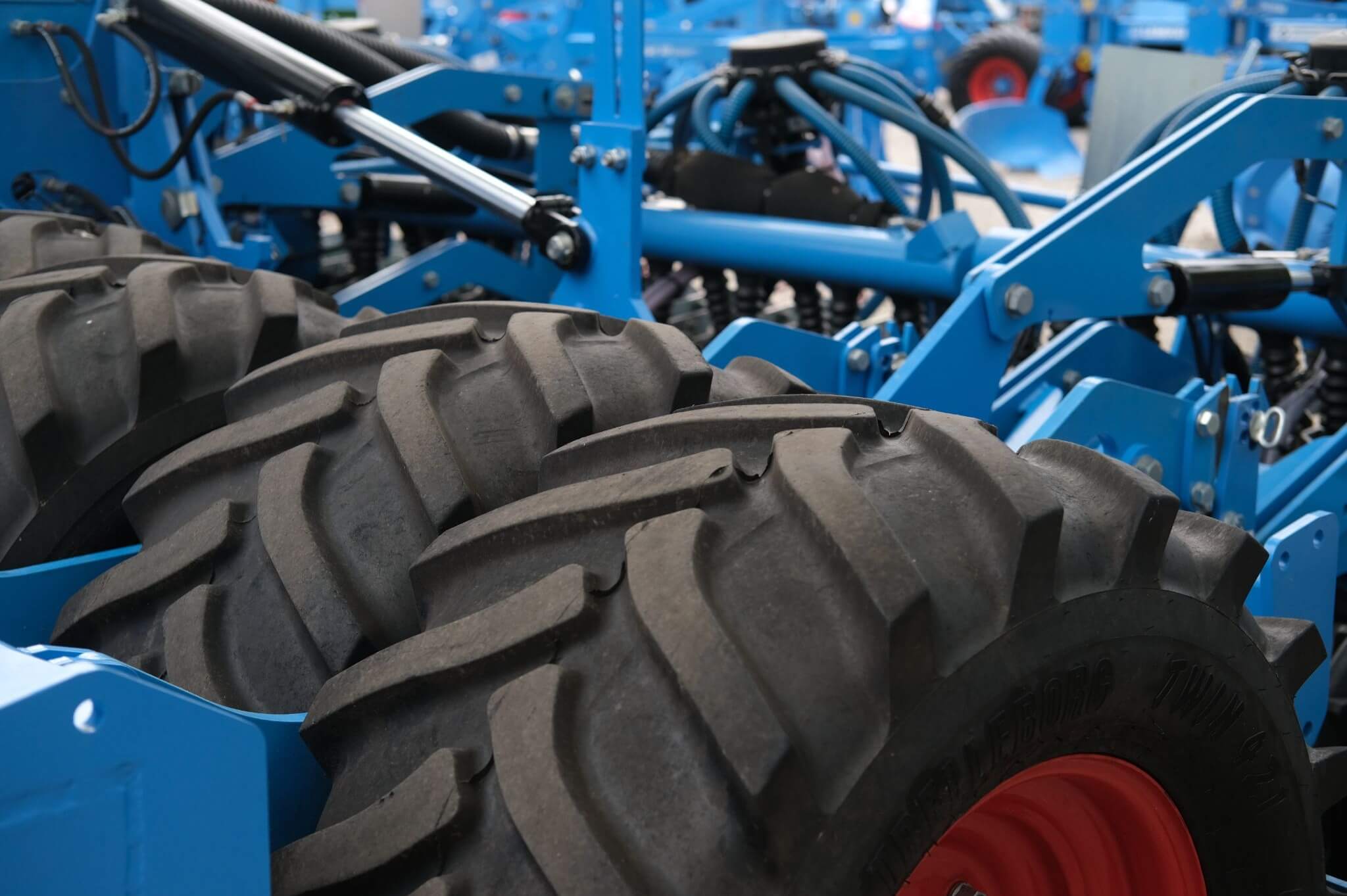
A pump that runs hot by mid-shift, a machine that struggles through a cold start, or a system that loses performance after a fluid change may have a viscosity problem. Those symptoms can have other causes, but hydraulic fluid viscosity belongs on the troubleshooting checklist. Getting it right helps balance lubrication, flow, and efficiency. Getting it wrong can contribute to wear, wasted energy, and unplanned downtime.
To select the right hydraulic fluid viscosity, start with the original equipment manufacturer (OEM) specification. Then check the requirements of the installed components and the fluid temperatures the machine actually experiences. This guide explains how those inputs help you evaluate ISO VG 32, 46, and 68 without treating any grade as a universal default.
What Hydraulic Fluid Viscosity Actually Measures
Hydraulic fluid viscosity is a fluid's resistance to flow. Thicker oil resists more; thinner oil resists less. In a hydraulic system, viscosity affects lubrication, internal leakage, resistance to flow, and cold-start response. It is important, but it is not the only factor: the fluid's formulation and the equipment's condition also matter.
ISO 3448 defines the ISO viscosity grade system for industrial liquid lubricants. The ISO VG number represents nominal kinematic viscosity at 40°C (104°F), expressed in centistokes (cSt). Each grade allows a 10% tolerance on either side of its nominal value.
That means ISO VG 46 covers 41.4 to 50.6 cSt at 40°C. ISO VG 32 covers 28.8 to 35.2 cSt, and ISO VG 68 covers 61.2 to 74.8 cSt. Moving from 32 to 46 or from 46 to 68 raises nominal viscosity by roughly 44% to 48%, so these are meaningful differences, not minor adjustments.
Viscosity index, or VI, describes how viscosity changes with temperature. Under ASTM D2270, it is calculated from kinematic viscosities at 40°C and 100°C. A higher VI indicates less viscosity change as temperature changes. Check the actual product data rather than assuming every oil in a viscosity grade behaves the same way.
The 40°C reference is not a target operating temperature. Oil generally becomes thinner above that temperature and thicker below it. Your machine's actual fluid temperatures determine whether the selected oil stays within its required viscosity limits.
Not sure which fluid matches your machine's specification? Contact a Hydraulic Supply Company solution center for help identifying the required specification and checking product availability.
Where to Find the Right Viscosity for Your Machine
Open the equipment manual before comparing grades. Confirm the required fluid type, performance specifications, and any OEM approvals, then review the viscosity limits for the installed pump, motors, and other relevant components. A matching ISO grade does not establish that two fluids are interchangeable.
Look for three kinds of viscosity guidance:
-
Minimum operating viscosity: the lower limit for the specified operating conditions. Going below it can increase leakage and reduce lubrication protection.
-
Recommended or optimum operating range: the viscosity band the manufacturer identifies for normal operation. A permitted minimum is not necessarily a good continuous-running target.
-
Maximum cold-start viscosity: the upper limit for starting under specified conditions, which may include restrictions on speed, pressure, and warm-up time.
Keep startup and continuous-operation limits separate. For example, Danfoss's H1 axial piston pump documentation gives a recommended range of 12 to 80 cSt and reserves the 1,600 cSt maximum for cold starts. Those values describe that product family, not every hydraulic pump. The applicable model's full operating restrictions still govern.
When the manual is missing or the machine has been rebuilt, identify the installed pump and motor models and confirm their requirements with the equipment manufacturer or a qualified technical specialist. Do not choose ISO VG 46, or any other grade, simply because the original specification is unavailable.
Match the Grade to Your Pump Type
Pump design influences lubrication requirements, but the words vane, piston, and gear do not establish a universal viscosity range. Use the manufacturer's requirements for the specific model, approved fluid, and operating conditions.
Vane pumps illustrate why generic limits can mislead. Parker's T6G, T67G, and T6ZC documentation permits a 10 cSt minimum at full speed and pressure with specified HF-0 and HF-2 fluids. It separately lists a 108 cSt maximum at full speed and pressure and a 2,000 cSt cold-start maximum at low speed and pressure. These are not interchangeable operating limits.
Piston pumps also require model-specific checks. Do not assume a piston pump can always tolerate thinner oil than a vane pump, or that every piston-pump system should use the same grade. The installed unit's lubrication, temperature, and operating restrictions determine the selection.
Gear-pump efficiency, contamination limits, and permissible viscosity depend on the design. Internal-gear and external-gear pumps should not be treated as identical, and a broad permissible viscosity range does not remove the need to meet cleanliness requirements.
The practical rule is the same for all three: select for the actual components, not the pump category alone. A machine may accept several grades under different conditions, but each candidate must satisfy the relevant requirements throughout the expected duty cycle.

Factor In Your Temperature Range
Once you know the component limits, evaluate the fluid at both ends of its expected temperature range. The ISO grade identifies viscosity at one reference temperature; the lubricant supplier's viscosity-temperature data show how that particular fluid behaves elsewhere.
Fluid Temperature at Cold Start
Use the lowest expected oil temperature when the machine starts. After a long outdoor shutdown, that may be close to ambient temperature, but heaters, indoor storage, and residual heat can change the relationship.
Oil that is too viscous can restrict inlet flow and increase the risk of pump starvation and cavitation. Confirm the startup viscosity limit and follow the manufacturer's warm-up procedure. A fluid that meets a cold-start ceiling is not automatically suitable for immediate full-speed, full-load operation.
Fluid Temperature During Operation
Use the manufacturer's specified measurement points, including the hottest relevant component location. Do not assume reservoir temperature is the highest temperature in the system. For example, Danfoss's H1 guidance applies its operating-temperature limits at the hottest point, normally the case drain port.
Check both normal running conditions and expected heavy-duty operation. Sustained load, cooling performance, and ambient conditions can affect fluid temperature. If viscosity approaches a limit, investigate the operating conditions rather than automatically moving to a heavier grade.
There is no universal rule that oil temperatures above 60°C (140°F) require ISO VG 68. A candidate fluid must stay within the equipment's viscosity and temperature limits when hot, without exceeding its startup limits when cold.
When Viscosity Index Matters
A wide temperature swing makes VI especially relevant. Oil that starts near -9°C (16°F) and later reaches 70°C (158°F) must work across very different conditions. A high-VI fluid may help, but its grade and VI number alone do not confirm suitability at either extreme.
Review the candidate fluid's low-temperature data, operating-temperature viscosity, and shear stability. Danfoss's hydraulic-fluid guidance notes that polymer viscosity-index improvers can shear down in service. Selection should account for that possibility rather than relying only on fresh-oil values.
ISO VG 32 vs 46 vs 68: Making the Call
These three hydraulic oil grades provide useful comparison points. Their relative behavior is easiest to understand when comparing similar formulations with similar viscosity indices at the same temperatures.
|
Factor |
ISO VG 32 |
ISO VG 46 |
ISO VG 68 |
|
Viscosity range at 40°C |
28.8-35.2 cSt |
41.4-50.6 cSt |
61.2-74.8 cSt |
|
Relative cold-start viscosity* |
Lower |
Intermediate |
Higher |
|
Relative viscosity at the same elevated temperature* |
Lower |
Intermediate |
Higher |
|
Potential application fit |
Where lower viscosity is required, subject to hot-running limits |
Where intermediate viscosity meets startup and running limits |
Where higher operating viscosity is required, subject to startup limits |
|
Potential for excessive cold-start viscosity* |
Lower |
Intermediate |
Higher |
|
Tendency toward internal leakage at the same hot-running conditions* |
Higher |
Intermediate |
Lower |
* Illustrative trends for comparable fluids with similar viscosity indices at the same temperatures. Actual startup behavior, leakage, and lubrication performance depend on the formulation and equipment. These comparisons do not replace OEM specifications, and viscosity grade alone does not rank anti-wear protection.
ISO VG 32 is the lower-viscosity option at 40°C. It may suit equipment that needs lower viscosity at startup or during relatively cool operation. The trade-off is whether it retains sufficient viscosity when hot. It is not automatically correct for every cold climate or high-speed circuit.
ISO VG 46 is the intermediate option. It may meet a machine's requirements across its operating range, but it is not a safe default when those requirements are unknown. Check the specified fluid type, approvals, and viscosity limits before selecting it or standardizing across a fleet.
ISO VG 68 is the higher-viscosity option. It may be appropriate where a lower grade would become too thin at operating temperature. Confirm that the selected product also meets startup requirements. High pressure, press operation, or a temperature above 60°C does not automatically require VG 68.
A Worked Example
Consider a hypothetical mobile machine using a Danfoss H1 axial piston pump. Assume the oil starts at -7°C (about 20°F) and reaches 70°C (158°F) at the specified hot-running measurement point. The temperatures are illustrative; the H1 recommended viscosity range of 12 to 80 cSt comes from its published documentation.
Instead of assigning one assumed viscosity curve to every ISO grade, compare named products. The table uses published data for Mobil DTE 20 Ultra oils and Mobil DTE 10 Excel 46. They illustrate the calculation, not a product recommendation for this hypothetical machine.
|
Example fluid |
Published viscosity at 40°C |
Published viscosity at 100°C |
Estimated viscosity at 70°C |
|
Mobil DTE 24 Ultra / ISO VG 32 |
33.4 cSt |
5.8 cSt |
11.9 cSt |
|
Mobil DTE 25 Ultra / ISO VG 46 |
46.2 cSt |
7.1 cSt |
15.3 cSt |
|
Mobil DTE 26 Ultra / ISO VG 68 |
68.6 cSt |
8.9 cSt |
20.5 cSt |
|
Mobil DTE 10 Excel 46 / ISO VG 46 |
45.7 cSt |
8.4 cSt |
17.0 cSt |
The 70°C values are two-point ASTM D341 viscosity-temperature estimates calculated from the listed 40°C and 100°C data and rounded to one decimal place. They are not field measurements or guaranteed product specifications.
The VG 32 example falls just below the H1’s 12 cSt recommended minimum at 70°C, while the other examples stay inside the range with more margin. Notice that the two VG 46 products do not have identical estimated running viscosities despite sharing a grade.
That answers only the hot-running question. Before selecting a fluid, obtain supplier-confirmed low-temperature data for the -7°C start and check the pump's startup restrictions, the machine's fluid specification, and the other installed components. Do not extrapolate these operating-temperature estimates into a cold-start approval. A high-VI VG 46 may be worth evaluating, but the final choice must pass both temperature checks.
The selection process is straightforward: identify the requirements, establish actual fluid temperatures, compare product-specific data, and confirm the match before filling. When the manual is unavailable, seek technical guidance rather than substituting a generic grade recommendation.
Matching a fluid to a rebuilt machine or an unclear specification? Contact the Hydraulic Supply Company team for help identifying the required fluid specification and checking product availability.
Frequently Asked Questions
What Happens If Hydraulic Fluid Viscosity Is Too High?
Oil that is too viscous can restrict flow to the pump inlet, increasing the risk of starvation, cavitation, noise, and sluggish response. It can also increase resistance through passages and filters and contribute to energy losses. Check actual fluid temperature and the manufacturer's viscosity limits before changing grades; similar symptoms can have other causes.
What Happens If Hydraulic Fluid Viscosity Is Too Low?
Oil below the required viscosity can increase internal leakage and reduce lubrication protection. The result may be lower volumetric efficiency, reduced performance, and accelerated wear. Check viscosity at the relevant operating temperature rather than judging the oil only by its ISO grade at 40°C.
Is ISO VG 46 the Same As SAE Grade Oil?
No. ISO VG and SAE engine-oil grades use different classification systems. An approximate cross-reference is not an interchangeability approval. Engine oils and hydraulic oils can also have different additive packages and performance characteristics. Use an engine oil in a hydraulic system only when the equipment manufacturer specifies or approves it for that application.
Can I Mix ISO VG 32 and ISO VG 68 to Get ISO VG 46?
A blend may fall within the ISO VG 46 viscosity range, but that does not make it equivalent to a formulated VG 46 product. The result depends on the actual oils and proportions, and matching viscosity does not confirm compatibility, performance, or OEM approval. Different additive packages can interact negatively. Consult the lubricant supplier and equipment manufacturer before mixing fluids, and use the specified finished product for routine filling and top-offs.
Why Is Hydraulic Oil Viscosity Measured at 40 Degrees Celsius?
ISO 3448 uses 40°C as the reference temperature for classifying industrial liquid lubricants, allowing grades to be compared consistently. It is a classification reference, not a recommended operating temperature. Evaluate the fluid's viscosity at the temperatures your machine actually experiences, which may be above or below 40°C.
What Is a Good Viscosity Index for Hydraulic Oil?
There is no single ideal VI for every machine. A higher VI generally means less viscosity change with temperature, which can be useful for equipment that starts cold and runs hot. The fluid must still meet the required specifications throughout that range. Review shear stability when polymer VI improvers are used, and use oil analysis to check that in-service viscosity remains acceptable.
How Often Should Hydraulic Fluid Viscosity Be Checked?
Follow the sampling schedule established by the OEM, lubricant supplier, and maintenance program, and investigate unexpected changes in machine performance. Compare results with a fresh-oil baseline and previous samples. Oil-analysis warning limits vary by application. Many programs treat a change of about 10% from the baseline as a reason to investigate, though limits vary. A viscosity shift alone does not identify the cause. Additional results help distinguish issues such as contamination, oxidation, shear, or an incorrect top-off.

Share on Facebook

Share on X

Share on Pinterest
Quick Add Product
Account Summary
Short Code:
Credit Limit:
Current Balance:
Recent Posts

Tell us what you need and we'll get back to you.
Fields marked * are required.
Thanks — your inquiry's on its way