
-
All Products
- Hydraulic Power Systems & Components
- Shop all
- Hydraulic Pumps & Accessories
- Hydraulic Motors & Accessories
- Hydrostatic Transmissions
- Cylinders & Accessories
- Steering Units & Accessories
- Hydraulic Valves & Accessories
- Shop all
- Ball Valves
- Check Valves
- Check Valves (Pilot-Operated)
- Counterbalance Valves (Overcenter Valves)
- Cushion Valves (Double Relief Valves)
- Directional Control Valves
- Flow Control Valves
- Flow Divider Valves
- Gate Valves
- Logic Element Valves
- Needle Valves
- Plug Valves
- Pressure Reducing Valves
- Relief Valves
- Sandwich Valves
- Premium Selector Valves
- Slip-In Cartridge Valves
- Premium Stack Valves
- System Accessory Valves
- Premium Truck Valves
- Valve Accessories
- Electronic Control Components
- Pressure Sequence Valves
- Screw-In Cartridge Valves
- Motion Control Valves
- Shop Logic Element Valves
- Unloading Valves
- Drain Valves
- Hydraulic Filters & Accessories
- Power Units
- System Accessories
- High Force Hydraulics
- Pneumatic Power & Control
- Shop all
- Pneumatic Cylinders
- Pneumatic Valves & Accessories
- Pneumatic Air Line Filter, Regulator, & Lubicator (FRL's)
- Pneumatic Air Line Filters
- Premium Air Tool Hose Assemblies
- Air Line Lubricating Oil
- Safety Pop-Off Valves
- Pneumatic Air Line Filter & Regulator
- Pneumatic Air Line Filter Accessories
- Pneumatic Air Line Lubricators
- Pneumatic Air Tools
- Pneumatic Air Line Filter, Regulator, & Lubricator (FRL's)
- Pneumatic Air Line Regulators
- Pneumatic Cylinder Accessories
- Fluid Conveying
- Shop all
- Hose Products
- Tubing Products
- Piping Products
- Adapters
- Shop all
- Steel
- Shop all
- O-Ring Face Seal Braze Adapters
- O-Ring Face Seal To Straight Thread O-Ring
- O-Ring Face Seal To Pipe
- O-Ring Face Seal To 37° Flare
- O-Ring Face Seal To O-Ring Face Seal
- O-Ring Face Seal Accessories
- Pipe To Pipe
- Pipe to 37° Flare
- Pipe To Straight Thread O-Ring
- Pipe To Hose
- 37° Flare Union
- Straight Thread O-Ring to 37° Flare
- Straight Thread O-Ring to Straight Thread O-Ring
- Straight Thread O-Ring to Hose
- SAE Split Flange To 37° Flare
- SAE Split Flange To O-Ring Face Seal
- Braze & Weld to 37° Flare
- 42° Inverted Flare to 37° Flare
- Restrictor
- Metric to 37° Flare
- Metric to Pipe
- Metric
- BSPP to 37° Flare
- BSPP to Pipe
- BSPP to Metric
- BSPP to BSPT
- BSPP
- BSPT To Pipe
- BSPT To 37° Flare
- JIS
- JIS 30° Seat (BSPP Thread) To 37° Flare
- Komatsu, Kobelco
- BSPP to 37 deg Flare
- BSPT To JIS
- 37 deg Flare Union
- Pipe to 37 deg Flare
- Straight Thread O-Ring to 37 deg Flare
- O-Ring Face Seal To BSPP
- SAE Split Flange To 37 deg Flare
- Straight Thread O-Ring to Metric
- Metric to 37 deg Flare
- Straight Thread O-Ring to Pipe
- 37 deg Flare Plug
- BSPT To 37 deg Flare
- JIS 30 deg Seat (BSPP Thread) To 37 deg Flare
- O-Ring Face Seal To JIS
- Straight Thread O-Ring to BSPP
- O-Ring Face Seal To Metric
- SAE Split Flange To Pipe
- Auxiliary Components
- O-Ring Face Seal To 37 deg Flare
- Straight Thread O-Ring to JIS
- Braze & Weld to 37 deg Flare
- Metric to BSPT
- Pipe To STC (Snap to Connect)
- BSPP To Hose
- Flareless Fittings
- Braze & Weld to Pipe
- SAE Split Flange To SAE Split Flange
- SAE Split Flange To Straight Thread O-Ring
- 42 deg Inverted Flare Union & Accessories
- Push-to-Connect To STC (Snap to Connect)
- O-Ring Face Seal To STC (Snap to Connect)
- BSPT
- Pipe To 30 deg Flare
- SAE Split Flange Braze Adapters
- BSPT To Hose
- 42 deg Inverted Flare to 37 deg Flare
- Push-On to 37 deg Flare
- O-Ring Face Seal To Hose
- Stainless Steel
- Shop all
- Pipe To Pipe
- Pipe To 37° Flare
- 37° Flare Union
- Straight Thread O-Ring To 37° Flare
- Metric To 37° Flare
- BSPP To 37° Flare
- Auxiliary Components
- Metric
- BSPP
- 37 deg Flare Union
- BSPP To Pipe
- Straight Thread O-Ring To Pipe
- Pipe To 37 deg Flare
- BSPP To 37 deg Flare
- Metric To Pipe
- Metric To 37 deg Flare
- BSPP To Metric
- O-Ring Face Seal To Pipe
- Straight Thread O-Ring To 37 deg Flare
- BSPT To 37 deg Flare
- O-Ring Face Seal To Straight Thread O-Ring
- Straight Thread O-Ring To Straight Thread O-Ring
- SAE Split Flange To 37 deg Flare
- Pipe To Hose
- 37 deg Flare To Hose
- O-Ring Face Seal To O-Ring Face Seal
- 37 deg Flare Plug
- Straight Thread O-Ring To BSPP
- Braze & Weld to Pipe
- Metric to BSPT
- BSPT To Pipe
- BSPT
- Braze & Weld to 37 deg Flare
- Brass
- Shop all
- Pipe To Pipe
- Pipe To 37° Flare
- Pipe To 45° Flare
- 45° Flare Union
- 42° Inverted Flare To 45° Flare
- 42° Inverted Flare To Pipe
- 42° Inverted Flare Unions & Accessories
- Garden Hose Adapters
- Pipe To 45 deg Flare
- Braze & Weld to Pipe
- 42 deg Inverted Flare To Pipe
- 45 deg Flare Union
- BSPP
- 45 deg Inverted Flare Union
- Pipe To 37 deg Flare
- 37 deg Flare Union
- Pipe To Hose
- BSPP To Pipe
- 37 deg Flare To Hose
- BSPT To Hose
- 42 deg Inverted Flare To 37 deg Flare
- 45 deg Flare To Hose
- 45 deg Inverted Flare To Pipe
- BSPT
- 45 deg Inverted Flare To Hose
- BSPP to BSPT
- 37 deg Flare Plug
- 45 deg Inverted Flare To Tube
- O-Ring Face Seal Braze Adapters
- BSPP To Hose
- BSPT To Pipe
- Metric to Flare
- BSPT To 45 deg Flare
- Metric
- Metric To Pipe
- Hydraulic Quick Disconnects
- Miscellaneous Fluid Conveying Parts
- Shop all
- Flanges
- Metric & BSP Seals & Washers
- Protective Closures
- Split Flange Kits & O-Rings
- Support Clamps
- Swivel Joints
- Air Brake Products
- Hose, Tube & Pipe Cleaning System
- Flange Accessories
- Hose, Tube & Pipe Cleaning System Accessories
- Brake Hose Accessories
- Hose Accessories
- Support Clamp Accessories
- Fitting Assortments
- Performance Parts
- Shop all
- Hose
- Adapters
- Brake System Adapters
- Fuel System Components
- Couplings
- PRO CLAMP and Overbraid
- Accessories
- Reusable Fittings for AQP & Starlite Racing Hose
- Crimp Fittings for AQP & Starlite Racing Hose
- Fittings for AQP Socketless Hose
- Reusable Fittings for Aeroquip FBF A/C Hose
- Fittings for Teflon Racing Hose
- Reusable Fittings for AQP High Pressure Hose
- Assembly Equipment
- Hydraulic Brake Components
- Other Products
- Shop all
- Hydraulic Fluids & Oils for Industrial Systems
- Seals
- Industrial Chemical Maintenance Products
- Lubrication Equipment & Accessories
- Fasteners
- Valves
- Couplings
- Control Cables
- Thread Sealants
- Gloves
- Hand Tools
- Pressure Washer Products for Industrial & Commercial Use
- Hose Reels
- Winches
- Cable Hardware & Knobs
- Cable Remote Controls
- Industrial Corrosion Inhibitors
- Y Strainer
- Hose Nozzles
- Textbooks
- Cable (Wire) Ties
- Piston Vibrators
- Software Licenses
- Human Machine Interface & Accessories
- Safety Glasses
- Hydraulic Punches & Dies
- Thread Sealant Tapes
- Identification Tools
- Gasket Makers
- Threadlockers
- Tool Storage
- Temperature Controllers & Accessories
- Brazing Rods
- Gear Drives & Accessories
- Gauges
- Drill Bits
- Paint Markers
- Switches & Accessories
- Power Tools
- Cut-Off Wheels
- Work Lights
- Cleaning Cloths & Towels
- Hose Reel Accessories
- Labels
- Flashlights
- Pipe Wrapping Tapes
- Batteries
- Winch Parts & Accessories
- Pen Lights
- Hydraulic Power Systems & Components
-
Services
- 24/7 On-Site Mobile Services
- Control Cable Assemblies
- Crimper Maintenance Program
- Custom Hydraulic Components Fabrication
- Cut & Weld
- Danfoss x20 Stock Change Program
- Engineering Center Services
- Hose Kitting Services
- HPU Build Program
- Hydraulic & Industrial Hose Assemblies
- Hydraulic Repair & Service
- Tube Bending Services
- Vane Pump Build Program
- View All Services
- Branch Locations
- Catalogs
- Help
- Quick Order
SAME DAY SHIPPING
— Order by 2pm ET.
How to Select the Right Hydraulic Filter for Your System
Published September 15, 2026 | Last Updated November 23, 2026
How to Select the Right Hydraulic Filter for Your System
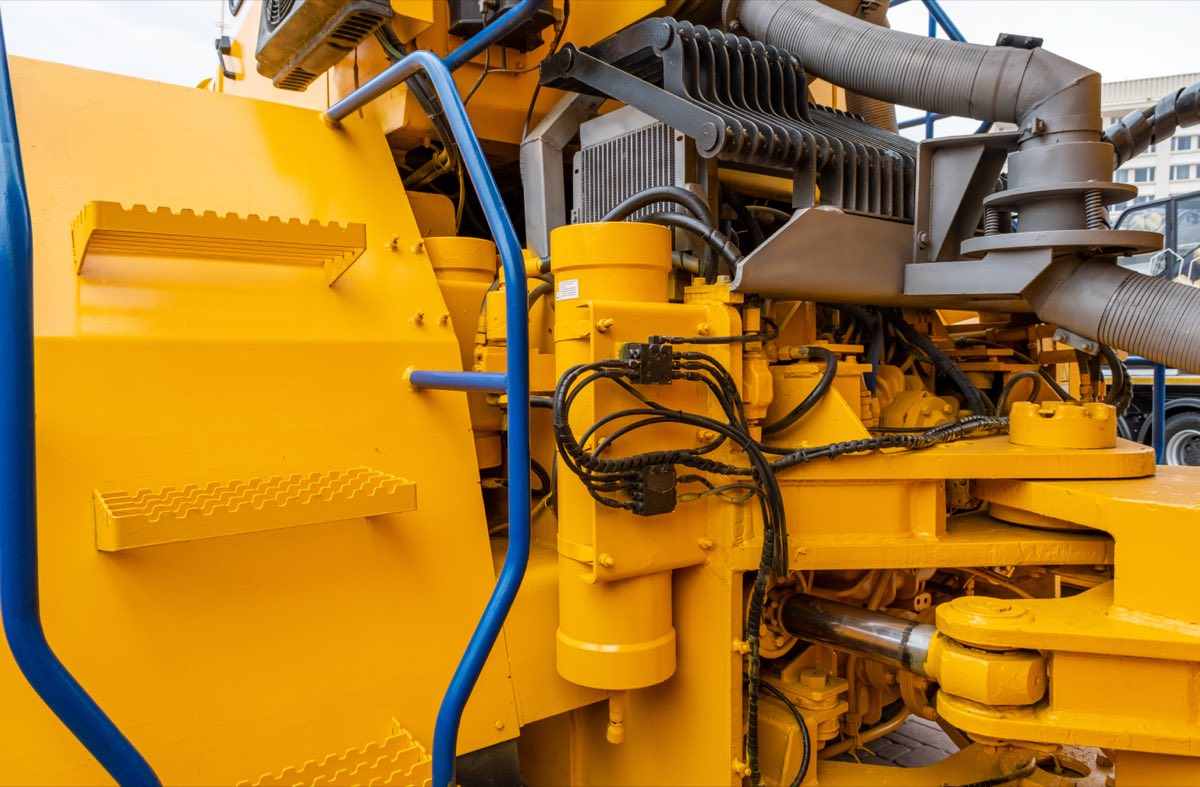
Knowing how to select a hydraulic filter comes down to a sequence of decisions, made in the right order, with a clear view of what you give up at each step. Get the order right, and you avoid the classic mismatches, an ultra-fine element that starves the pump, or a return filter sized for last year's flow.
Filtration is not a detail you bolt on at the end. Contamination is the dominant failure mode in fluid power. Published estimates put it behind roughly 70 to 80 percent of hydraulic system failures, and a single particle at the wrong clearance can score a valve spool or a pump swashplate. So the filter is not there to clean oil for its own sake. It is there to hold your system at a cleanliness level your components can live with.
Two definitions come first, because everything downstream depends on them. Micron rating is the particle size that a filter is rated to capture, measured in microns, where one micron is a millionth of a meter. Beta ratio is the measurement of how reliably it captures that size, covered in detail below. A filter is only as good as both numbers together. This guide walks the variables in the order you decide them, from where the filter lives in the circuit down to whether the housing will even bolt to your machine, and it names what you give up at every turn.
Start With the Target, How Clean Does the System Need to Be?
Before you look at a single element, decide how clean the oil has to be. Everything else in the checklist serves this number.
The industry uses the ISO 4406 cleanliness code, a three-number code such as 18/16/13. Each number is a scale value for the count of particles larger than 4, 6, and 14 µm(c) per milliliter of fluid. The scale is logarithmic, so every one-point change roughly doubles or halves the particle count. Lower numbers mean cleaner oil.
You set the target by finding the most contamination-sensitive component in the circuit and working to its requirement. The tightest clearances drive the whole system, and the rough hierarchy runs like this.
-
Servo valves are the most sensitive, with published targets of 15/13/10 above 3,000 psi.
-
Proportional valves sit just behind, at 16/14/11 above 3,000 psi.
-
Piston pumps and motors are next, followed by gear pumps and standard directional valves, which tolerate more.
The tradeoff here is money against margin. Chasing a servo-grade code on a system that only runs a gear pump and cylinders burns filter cost and pressure drop you do not need. Setting the target too loose to save money is the more expensive mistake, because you pay for it in worn pumps and unplanned downtime. Pick the honest number for the most sensitive part you actually have, then hold to it.
Once the target is set, the rest of the checklist is about building a filtration package that hits it and stays there.
Where Does the Filter Go? Suction, Pressure, Return, or Offline
Location is the first physical decision, and it shapes everything after it, from what micron rating is realistic to how much pressure drop you can absorb and whether you need a bypass. Most systems use more than one filter. Each position does a different job.
Suction filtration (before the pump)
A suction strainer or filter sits on the pump inlet and protects the pump from large debris drawn out of the reservoir. From a pure filtration standpoint, the inlet is a gentle place to work, because there is low fluid velocity and low pressure drop, so trapped particles are not driven back through the media.
The catch is real, and it is why suction filters stay coarse. Any restriction on the inlet risks starving the pump and causing cavitation, which wears the pump faster than the dirt would. Suction elements are therefore coarse, commonly 74 to 149 microns, which is 200 mesh to 100 mesh screen, and in-tank strainers usually carry no clogging indicator at all. A vacuum gauge or transducer on the inlet line is the reliable way to watch restriction build. What you end up with is a component that guards the pump against debris large enough to wreck it outright while doing almost nothing about the fine particles that wear it out slowly.
Pressure filtration (after the pump)
Put a filter on the pressure line, and you protect a specific downstream component, a servo or proportional valve, from both ingested dirt and wear debris the pump itself sheds. Because system pressure is available to push oil through the media, you can run finer elements here than anywhere else in the circuit, and the beta ratios hold up well.
You pay for that in two ways. The housing has to be rated for full-system pressure, which makes it heavier and more expensive, and the element experiences pressure and flow transients that can disturb captured particles. Use a pressure filter when a critical valve sits just downstream, and you cannot risk feeding it dirty oil. Nowhere else in the circuit will you get this fine filtration or this targeted protection, and nowhere else will the housing cost this much.
Return filtration (before the tank)
The return line is the default home for the main system filter, and for good reason. All the fluid coming back from the work carries the wear debris generated during the cycle, and catching it here keeps it out of the reservoir. The line runs at low pressure, so the housing is cheaper than a pressure unit, and you can still run a reasonably fine element.
The limits are worth naming. Return filters do not protect against dirt already in the tank on startup, and they see flow surges when cylinders retract, since a cylinder with a large rod relative to its bore pushes more oil back on retraction than the pump delivers. Size the filter for that peak return flow rather than pump flow, otherwise the bypass opens on every retract stroke. For most systems, the return line still offers the best balance of cost and cleanliness, with the caveat that it cleans oil only after the components have already seen it.
Offline filtration (kick-loop or recirculation)
An offline loop is a small dedicated pump and filter that pulls from the reservoir, cleans, and returns, running independently of the main circuit. Because it runs at its own steady flow and pressure, it filters continuously and gently, even when the machine is idle, and it can drive a dirty system down to a lower ISO code and hold it there.
The upside is that you can add heat exchangers and other conditioning equipment to the loop and treat the fluid, not just filter it. The downside is the up-front cost of a second pump, motor, and housing. Offline systems earn their keep on large reservoirs, high-value equipment, and systems where cleanliness targets are strict. You buy cleaner, more stable oil with a second pump, motor, and housing.
Micron Rating and Beta Ratio: The Efficiency You Can Actually Trust
Two filters can both say "10 micron" on the label and perform nothing alike. The micron rating tells you the particle size. The beta ratio tells you how reliably that size is captured, and it is the number that separates a real spec from marketing.
Beta ratio comes from the ISO 16889 multi-pass test, which counts particles upstream and downstream of the element at a given size. The ratio is upstream count divided by downstream count. Efficiency follows directly from it with the formula (beta minus 1) divided by beta, times 100. That turns the abstract number into a percentage you can compare.
|
Beta ratio (at a given micron size) |
Capture efficiency |
|
β = 2 |
50% |
|
β = 10 |
90% |
|
β = 75 |
98.7% |
|
β = 200 |
99.5% |
|
β = 1000 |
99.9% |
So a spec written as β₁₀(c) ≥ 1000 means the element removes 99.9 percent of particles 10 µm(c) and larger. A vague "10 micron nominal" rating with no beta figure tells you almost nothing about repeatable performance, and a nominally rated element can pass particles far larger than its label suggests. Always specify absolute ratings tied to a beta value at a stated micron size.
Two things pull against each other here. Finer media at a higher beta captures more, but it clogs faster and creates more pressure drop, which means shorter element life and more frequent changes. There is also little point specifying a very fine element on the return line if your target only calls for 17/15/12, because you spend on media and pressure drop for cleanliness the components never asked for. Match the beta and micron rating to the ISO target you set in step one. Clean enough, not cleaner than necessary.
Flow Rate, Viscosity, and Pressure Drop
Here is where a lot of good filter selections quietly go wrong: the element is right, but the housing is sized for the wrong flow.
Size the filter to the actual flow it will see at its location, and remember that is not always pump output. On a return line, cylinder rod-side geometry can push return flow well above pump flow during retraction. On a pressure line, size to pump delivery plus any regen flow. Undersize the housing and you generate excessive pressure drop, which either wastes energy or forces the bypass open and sends unfiltered oil downstream.
Viscosity is the multiplier that gets designed around less often than it should. Pressure drop through an element is roughly proportional to viscosity, so an element that flows fine at operating temperature can choke on cold-start oil that is many times thicker. Account for your coldest realistic start, not just the steady-state number.
Here is a working rule for the clean-element pressure drop, the drop across a fresh filter at normal operating viscosity.
-
Suction filters are governed by the pump's allowable inlet vacuum rather than a psi target, so check the pump manufacturer's limit and oversize the strainer for cold starts.
-
Return and general system filters are usually sized so the clean-element drop is no more than half the bypass cracking pressure, and preferably closer to a third of it.
-
Pressure filters give you more headroom, but every psi of drop is energy you paid the pump to create and then threw away.
Filtration pulls against flow capacity and energy. A bigger housing with a larger media area lowers pressure drop and extends element life, at a higher cost and more space. A tight housing saves both, but shortens change intervals and flirts with bypass. When in doubt, size up on media area; it is the cheapest way to buy both lower pressure drop and longer service life.
Bypass Valve or No Bypass, and How You Know It Is Time to Change
Every filter clogs as it does its job, and what happens at that moment is a design choice. A bypass valve is a spring-loaded check that opens once the element is too loaded to pass full flow, routing oil around it. On a return line or a general system filter you want one, because it protects the element from collapse and keeps the pump from being starved when the element loads up or the oil is cold. The cost is that unfiltered oil is reaching your components exactly when the system is dirtiest. A non-bypass filter, sometimes called last-chance, goes immediately upstream of something like a servo valve, where you would rather stop flow than let one dirty particle through. It gives you absolute protection, and it will choke the circuit if nobody changes the element.
Either way, the clogging indicator is what tells you when to act. It reads the differential pressure across the element and signals just before the bypass point, and it comes as a visual pop-up, a dial gauge, or an electrical switch that feeds a control panel. Read it warm. A cold system shows high differential from viscosity alone, so an indicator that trips on a cold morning does not mean the element is spent.
Port Size, Housing, and Physical Fit
The last decisions are the ones that make everything bolt up, and getting them right keeps the order from coming back as a return.
Confirm the port size and thread standard before you buy. Hydraulic ports come in several families that do not interchange: SAE straight thread O-ring boss, BSPP, NPT, and SAE J518 four-bolt flange connections on larger lines, where Code 61 is rated to 3,000 psi and Code 62 to 6,000 psi. Undersized ports create their own pressure drop, no matter how good the element is, so match the port to the line, not just the housing you happen to have.
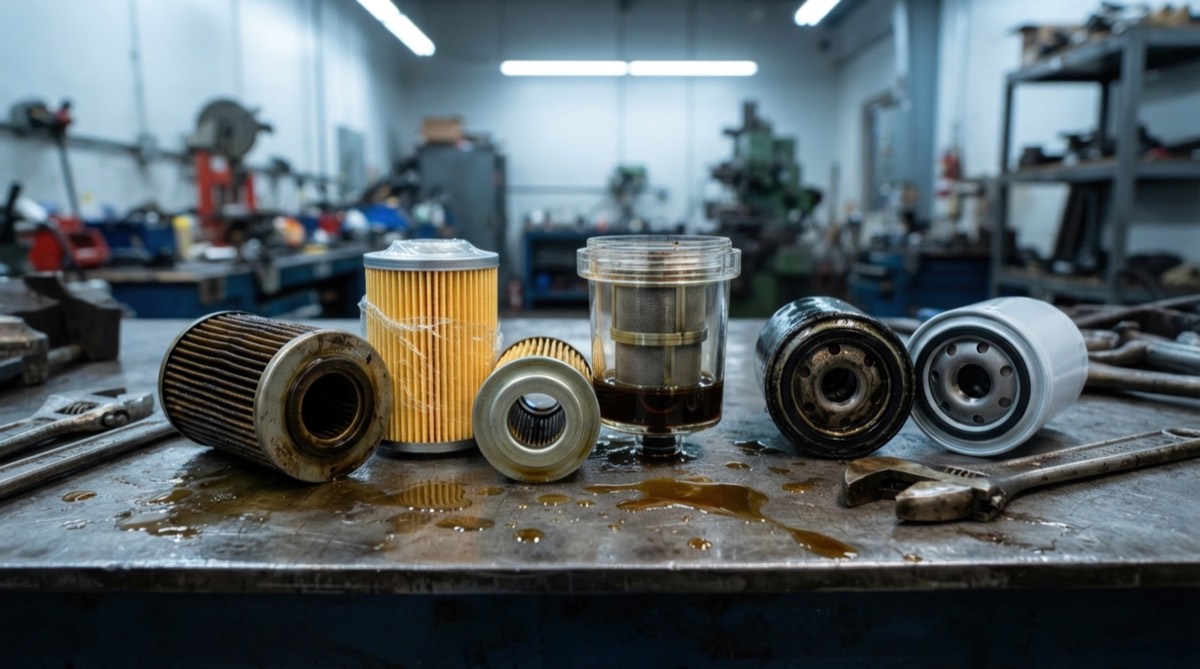
Then check the element itself. Housings and elements are not universal, and a "10 micron" element from one series will not necessarily seat, seal, and hold its beta rating in another manufacturer's housing. Confirm element length, diameter, end-cap style, and seal material. On seals, match the elastomer to the fluid: nitrile suits petroleum-based hydraulic oils, while phosphate ester fluids call for EPDM, which in turn swells and fails in mineral oil. Confirm the seal code against the filter manufacturer's fluid compatibility chart before ordering.
Finally, the details that decide the install. Verify the housing pressure rating against the location, since suction and return housings are generally built for low pressure, while pressure-line housings carry far higher ratings. Confirm mounting orientation and that you can physically reach the element to service it. A filter you can reach easily is the one that gets changed on schedule. And check availability, because a correct spec you cannot get for three weeks is not a solution when a machine is down.
Finding the Filter You Need
Selecting a hydraulic filter follows an order. Set an ISO cleanliness target from the most sensitive component in the circuit, then decide where the filter lives, because location determines how fine an element you can realistically run. Specify beta at the stated micron size rather than a nominal rating, size the housing for the flow the position actually sees rather than pump output alone, and confirm the port, element, and seal materials before the order goes in.
Hydraulic Supply Company stocks suction strainers, suction/return filters, return filters, pressure filters, and filter carts from recognized brands, supported by a centralized distribution center and local solution centers staffed by experienced professionals. A legible part number speeds the search, and an unmarked element can be identified from housing dimensions and application details.
Browse our hydraulic filters and accessories to find your replacement, or contact our team for help confirming specifications and cross-referencing an existing element.
Frequently Asked Questions
What micron rating do I need for a hydraulic filter?
There is no universal answer; the rating depends on your components. Work backward from the most contamination-sensitive part in the circuit, since servo and proportional valves need far finer filtration than gear pumps and standard directional valves. Set an ISO 4406 target first, then match the element to the media rating your component manufacturer specifies for that target.
What is a good beta ratio for a hydraulic filter?
A higher beta ratio means better, more repeatable particle capture at a stated size. Filtration targets are commonly written against a beta of 200 or a beta of 1000 at a given micron size, which equals 99.5 and 99.9 percent efficiency. A beta of 75 works out to 98.7 percent and is the threshold the multi-pass test method itself is built around. Always specify beta at a given micron size, not a "nominal" rating.
Where is the best place to install a hydraulic filter?
The return line is the most common main-filter location because it catches wear debris at low pressure and cost. Add a pressure filter to protect a specific critical valve, a coarse suction strainer to guard the pump inlet, and an offline loop for continuous conditioning on high-value or large-reservoir systems. Most systems combine several.
Should a hydraulic filter have a bypass valve?
It depends on the location. Return and general system filters usually need a bypass so a clogged element or cold oil cannot starve the pump or collapse the element; dirty oil beats no oil. A last-chance filter directly upstream of a servo valve is often run without a bypass, so no unfiltered fluid can reach the component, but it requires strict monitoring.
How do I know when to change a hydraulic filter?
Use the clogging indicator, which reads the differential pressure across the element and signals when it nears the bypass point. Read it with the oil at operating temperature, since cold, thick oil gives a false high reading. Also change elements on schedule and after any event that adds contamination, such as a component failure or fluid top-off.
Why does viscosity matter when sizing a hydraulic filter?
Pressure drop through a filter rises with fluid viscosity, so a filter sized only for warm oil can choke at cold start when the oil is far thicker. That spike can hold the bypass open and send unfiltered fluid downstream until the system warms. Size the housing and media area for your coldest realistic startup, not just steady-state temperature.
Are hydraulic filter elements interchangeable between brands?
Not reliably. Even when two elements share a micron rating, differences in length, diameter, end-cap design, and seal material affect whether it seats, seals, and holds its rated beta performance in a given housing. Match the element to the housing series it was tested in, and confirm seal compatibility with your specific hydraulic fluid before ordering.

Share on Facebook

Share on X

Share on Pinterest
Quick Add Product
Account Summary
Short Code:
Credit Limit:
Current Balance:
Recent Posts
Tell us what you need and we'll get back to you.
Fields marked * are required.
Thanks — your inquiry's on its way