-
All Products
- Hydraulic Power Systems & Components
- Shop all
- Hydraulic Pumps & Accessories
- Hydraulic Motors & Accessories
- Hydrostatic Transmissions
- Cylinders & Accessories
- Steering Units & Accessories
- Hydraulic Valves & Accessories
- Shop all
- Ball Valves
- Check Valves
- Check Valves (Pilot-Operated)
- Counterbalance Valves (Overcenter Valves)
- Cushion Valves (Double Relief Valves)
- Directional Control Valves
- Flow Control Valves
- Flow Divider Valves
- Gate Valves
- Logic Element Valves
- Needle Valves
- Plug Valves
- Pressure Reducing Valves
- Relief Valves
- Sandwich Valves
- Premium Selector Valves
- Slip-In Cartridge Valves
- Premium Stack Valves
- System Accessory Valves
- Premium Truck Valves
- Valve Accessories
- Electronic Control Components
- Pressure Sequence Valves
- Screw-In Cartridge Valves
- Motion Control Valves
- Shop Logic Element Valves
- Unloading Valves
- Drain Valves
- Hydraulic Filters & Accessories
- Power Units
- System Accessories
- High Force Hydraulics
- Pneumatic Power & Control
- Shop all
- Pneumatic Cylinders
- Pneumatic Valves & Accessories
- Pneumatic Air Line Filter, Regulator, & Lubicator (FRL's)
- Pneumatic Air Line Filters
- Premium Air Tool Hose Assemblies
- Air Line Lubricating Oil
- Safety Pop-Off Valves
- Pneumatic Air Line Filter & Regulator
- Pneumatic Air Line Filter Accessories
- Pneumatic Air Line Lubricators
- Pneumatic Air Tools
- Pneumatic Air Line Filter, Regulator, & Lubricator (FRL's)
- Pneumatic Air Line Regulators
- Pneumatic Cylinder Accessories
- Fluid Conveying
- Shop all
- Hose Products
- Tubing Products
- Piping Products
- Adapters
- Shop all
- Steel
- Shop all
- O-Ring Face Seal Braze Adapters
- O-Ring Face Seal To Straight Thread O-Ring
- O-Ring Face Seal To Pipe
- O-Ring Face Seal To 37° Flare
- O-Ring Face Seal To O-Ring Face Seal
- O-Ring Face Seal Accessories
- Pipe To Pipe
- Pipe to 37° Flare
- Pipe To Straight Thread O-Ring
- Pipe To Hose
- 37° Flare Union
- Straight Thread O-Ring to 37° Flare
- Straight Thread O-Ring to Straight Thread O-Ring
- Straight Thread O-Ring to Hose
- SAE Split Flange To 37° Flare
- SAE Split Flange To O-Ring Face Seal
- Braze & Weld to 37° Flare
- 42° Inverted Flare to 37° Flare
- Restrictor
- Metric to 37° Flare
- Metric to Pipe
- Metric
- BSPP to 37° Flare
- BSPP to Pipe
- BSPP to Metric
- BSPP to BSPT
- BSPP
- BSPT To Pipe
- BSPT To 37° Flare
- JIS
- JIS 30° Seat (BSPP Thread) To 37° Flare
- Komatsu, Kobelco
- BSPP to 37 deg Flare
- BSPT To JIS
- 37 deg Flare Union
- Pipe to 37 deg Flare
- Straight Thread O-Ring to 37 deg Flare
- O-Ring Face Seal To BSPP
- SAE Split Flange To 37 deg Flare
- Straight Thread O-Ring to Metric
- Metric to 37 deg Flare
- Straight Thread O-Ring to Pipe
- 37 deg Flare Plug
- BSPT To 37 deg Flare
- JIS 30 deg Seat (BSPP Thread) To 37 deg Flare
- O-Ring Face Seal To JIS
- Straight Thread O-Ring to BSPP
- O-Ring Face Seal To Metric
- SAE Split Flange To Pipe
- Auxiliary Components
- O-Ring Face Seal To 37 deg Flare
- Straight Thread O-Ring to JIS
- Braze & Weld to 37 deg Flare
- Metric to BSPT
- Pipe To STC (Snap to Connect)
- BSPP To Hose
- Flareless Fittings
- Braze & Weld to Pipe
- SAE Split Flange To SAE Split Flange
- SAE Split Flange To Straight Thread O-Ring
- 42 deg Inverted Flare Union & Accessories
- Push-to-Connect To STC (Snap to Connect)
- O-Ring Face Seal To STC (Snap to Connect)
- BSPT
- Pipe To 30 deg Flare
- SAE Split Flange Braze Adapters
- BSPT To Hose
- 42 deg Inverted Flare to 37 deg Flare
- Push-On to 37 deg Flare
- O-Ring Face Seal To Hose
- Stainless Steel
- Shop all
- Pipe To Pipe
- Pipe To 37° Flare
- 37° Flare Union
- Straight Thread O-Ring To 37° Flare
- Metric To 37° Flare
- BSPP To 37° Flare
- Auxiliary Components
- Metric
- BSPP
- 37 deg Flare Union
- BSPP To Pipe
- Straight Thread O-Ring To Pipe
- Pipe To 37 deg Flare
- BSPP To 37 deg Flare
- Metric To Pipe
- Metric To 37 deg Flare
- BSPP To Metric
- O-Ring Face Seal To Pipe
- Straight Thread O-Ring To 37 deg Flare
- BSPT To 37 deg Flare
- O-Ring Face Seal To Straight Thread O-Ring
- Straight Thread O-Ring To Straight Thread O-Ring
- SAE Split Flange To 37 deg Flare
- Pipe To Hose
- 37 deg Flare To Hose
- O-Ring Face Seal To O-Ring Face Seal
- 37 deg Flare Plug
- Straight Thread O-Ring To BSPP
- Braze & Weld to Pipe
- Metric to BSPT
- BSPT To Pipe
- BSPT
- Braze & Weld to 37 deg Flare
- Brass
- Shop all
- Pipe To Pipe
- Pipe To 37° Flare
- Pipe To 45° Flare
- 45° Flare Union
- 42° Inverted Flare To 45° Flare
- 42° Inverted Flare To Pipe
- 42° Inverted Flare Unions & Accessories
- Garden Hose Adapters
- Pipe To 45 deg Flare
- Braze & Weld to Pipe
- 42 deg Inverted Flare To Pipe
- 45 deg Flare Union
- BSPP
- 45 deg Inverted Flare Union
- Pipe To 37 deg Flare
- 37 deg Flare Union
- Pipe To Hose
- BSPP To Pipe
- 37 deg Flare To Hose
- BSPT To Hose
- 42 deg Inverted Flare To 37 deg Flare
- 45 deg Flare To Hose
- 45 deg Inverted Flare To Pipe
- BSPT
- 45 deg Inverted Flare To Hose
- BSPP to BSPT
- 37 deg Flare Plug
- 45 deg Inverted Flare To Tube
- O-Ring Face Seal Braze Adapters
- BSPP To Hose
- BSPT To Pipe
- Metric to Flare
- BSPT To 45 deg Flare
- Metric
- Metric To Pipe
- Hydraulic Quick Disconnects
- Miscellaneous Fluid Conveying Parts
- Shop all
- Flanges
- Metric & BSP Seals & Washers
- Protective Closures
- Split Flange Kits & O-Rings
- Support Clamps
- Swivel Joints
- Air Brake Products
- Hose, Tube & Pipe Cleaning System
- Flange Accessories
- Hose, Tube & Pipe Cleaning System Accessories
- Brake Hose Accessories
- Hose Accessories
- Support Clamp Accessories
- Fitting Assortments
- Performance Parts
- Shop all
- Hose
- Adapters
- Brake System Adapters
- Fuel System Components
- Couplings
- PRO CLAMP and Overbraid
- Accessories
- Reusable Fittings for AQP & Starlite Racing Hose
- Crimp Fittings for AQP & Starlite Racing Hose
- Fittings for AQP Socketless Hose
- Reusable Fittings for Aeroquip FBF A/C Hose
- Fittings for Teflon Racing Hose
- Reusable Fittings for AQP High Pressure Hose
- Assembly Equipment
- Hydraulic Brake Components
- Other Products
- Shop all
- Hydraulic Fluids & Oils for Industrial Systems
- Seals
- Industrial Chemical Maintenance Products
- Lubrication Equipment & Accessories
- Fasteners
- Valves
- Couplings
- Control Cables
- Thread Sealants
- Gloves
- Hand Tools
- Pressure Washer Products for Industrial & Commercial Use
- Hose Reels
- Winches
- Cable Hardware & Knobs
- Cable Remote Controls
- Industrial Corrosion Inhibitors
- Y Strainer
- Hose Nozzles
- Textbooks
- Cable (Wire) Ties
- Piston Vibrators
- Software Licenses
- Human Machine Interface & Accessories
- Safety Glasses
- Hydraulic Punches & Dies
- Thread Sealant Tapes
- Identification Tools
- Gasket Makers
- Threadlockers
- Tool Storage
- Temperature Controllers & Accessories
- Brazing Rods
- Gear Drives & Accessories
- Gauges
- Drill Bits
- Paint Markers
- Switches & Accessories
- Power Tools
- Cut-Off Wheels
- Work Lights
- Cleaning Cloths & Towels
- Hose Reel Accessories
- Labels
- Flashlights
- Pipe Wrapping Tapes
- Batteries
- Winch Parts & Accessories
- Pen Lights
- Hydraulic Power Systems & Components
-
Services
- 24/7 On-Site Mobile Services
- Control Cable Assemblies
- Crimper Maintenance Program
- Custom Hydraulic Components Fabrication
- Cut & Weld
- Danfoss x20 Stock Change Program
- Engineering Center Services
- Hose Kitting Services
- HPU Build Program
- Hydraulic & Industrial Hose Assemblies
- Hydraulic Repair & Service
- Tube Bending Services
- Vane Pump Build Program
- View All Services
- Branch Locations
- Catalogs
- Help
- Quick Order
SAME DAY SHIPPING
— Order by 2pm EST.
Hydraulic Pump Brands and How to Choose the Right One for Performance, Longevity, and Fit
Published November 17, 2026 | Last Updated November 17, 2026
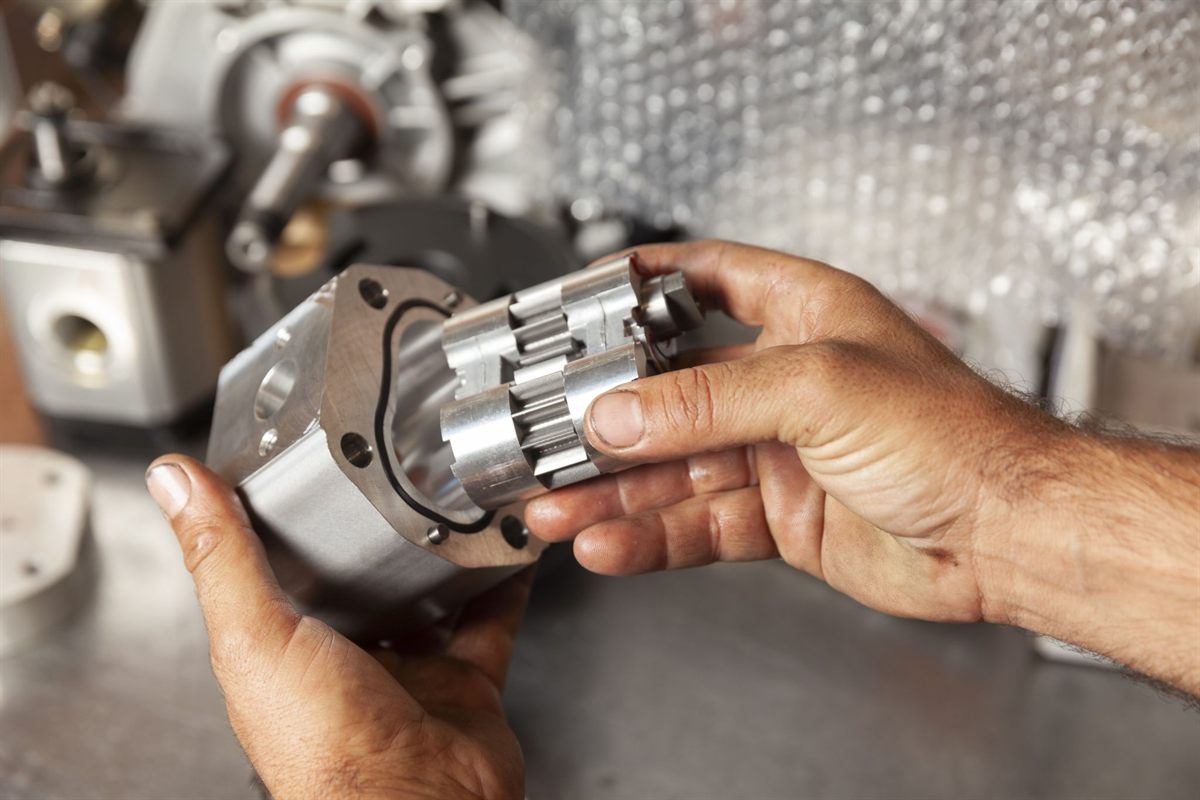
Hydraulic pump brands are not automatically interchangeable. Two pumps with the same displacement rating can still differ in shaft spline, mounting flange, port thread, rotation, and internal tolerances, and those differences decide whether a replacement runs reliably or wears out the rest of the circuit. Cross-brand swaps do work, but only when every one of those interfaces matches, which is why the brand you choose for a replacement matters more than most buyers expect.
A hydraulic pump converts mechanical energy from an engine or electric motor into working hydraulic power, moving oil under pressure to cylinders, motors, and valves. Most pumps used in hydraulic systems are positive displacement pumps, meaning each revolution delivers a set volume of fluid while internal leakage stays small relative to output. Get the pump right, and the whole circuit behaves, while getting it wrong leaves you chasing heat, noise, and pressure loss for the life of the machine.
Below, we walk through the major hydraulic pump manufacturers, how pumps are identified, and when brand matching is not optional, so you can source the right unit the first time.
Key Takeaways
- Two pumps with the same displacement can differ in tolerance and interface, which is why the brand matters for reliability and compatibility.
- Each of the major hydraulic pump brands has a stronghold, so matching a brand's strength to your duty cycle is the first filter.
- Reading the nameplate and model code is how pumps are identified, and it turns a week of guessing into a one-call replacement.
- Brand matching is most critical on factory-spec replacements and repairs, while a clean-sheet build leaves room to substitute once every interface is verified.
- A distributor that stocks the brands and can read a model code is how you source the right pump the first time.
- The most common pump questions include which manufacturers equipment builders spec, cross-referencing legacy Eaton and Vickers pumps, calculating flow, and spotting a failing pump.
Why Hydraulic Pump Brands Matter
Hydraulic pump brands matter because the same displacement rating can hide different tolerances, interfaces, and efficiency, and those differences decide reliability. Brand selection comes down to three things: performance, longevity, and compatibility. A pump that meets the published flow and pressure ratings but was built to looser tolerances will run hotter and wear faster. In mobile machinery and equipment where the pump shares a tank with the rest of the system, that wear travels. Metal particles from a failing pump move downstream into valves and actuators.
Compatibility is where brand matters most on a replacement. Two gear pumps rated at 20 cubic centimeters (cc) per revolution from different manufacturers can share a displacement and still differ in shaft spline, mounting flange, port thread, and rotation. Install the wrong one and it either will not bolt up or, if the rotation is reversed, it will not prime and can damage the shaft seal. Original equipment manufacturers (OEMs) spec a particular pump brand because the rest of the machine was engineered around its exact output and interface.
Longevity ties back to how the pump is made and how well it suits the duty. Reputable brands publish efficiency and pressure ratings and back them with testing. Rated margin matters, since a pump run near its limits in a high-cycle application wears differently than one with capacity to spare. Buying on the nameplate rating alone, without considering how the pump will hold up in your application's duty cycle, can lead to repeat failures and additional downtime.
Working through a pump replacement or a new build and want a second set of eyes on the spec? Browse hydraulic pumps and accessories or ask the Hydraulic Supply Company technical team to help you match flow, pressure, and mounting before you order.
The Major Hydraulic Pump Brands and Manufacturers
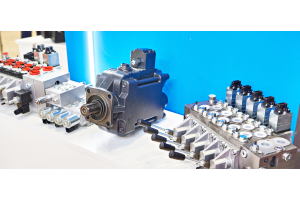
The fluid power market is anchored by a handful of hydraulic pump manufacturers whose pumps show up across construction, agriculture, marine, and industrial equipment. Knowing who builds what helps you narrow a replacement search quickly.
- Parker Hannifin is one of the largest motion and control companies in the world and produces a broad line of gear, vane, and piston pumps for both mobile and industrial service.
- Bosch Rexroth is a German manufacturer known for axial piston pumps and electrohydraulic controls used in heavy industrial and mobile machinery.
- Danfoss Power Solutions has built mobile hydraulic components for decades and expanded its lineup when it completed its $3.3 billion purchase of Eaton's hydraulics business in August 2021. The acquisition brought legacy Eaton and Vickers product lines under Danfoss, which is worth remembering when you cross-reference an older pump.
- Kawasaki Precision Machinery builds high-pressure axial piston pumps common on excavators and other construction equipment.
- Casappa is an Italian manufacturer recognized for gear and piston pumps widely used in agricultural and mobile applications.
- Permco produces gear and vane pumps and motors for demanding mobile and industrial work, and is one of the brands you can source directly through Hydraulic Supply Company's Permco line.
- Bucher Hydraulics rounds out the field with gear pumps, power units, and compact lift components.
| Brand | Best-known pump types | Typical applications |
|---|---|---|
| Parker Hannifin | Gear, vane, piston | Mobile and industrial |
| Bosch Rexroth | Axial piston | Heavy industrial and mobile |
| Danfoss Power Solutions | Gear, vane, piston | Mobile and industrial |
| Kawasaki Precision Machinery | High-pressure axial piston | Excavators and construction |
| Casappa | Gear, piston | Agricultural and mobile |
| Permco | Gear, vane | Mobile and industrial |
| Bucher Hydraulics | Gear | Power units and lifts |
No brand wins everywhere; each has a stronghold. Kawasaki and Rexroth dominate heavy piston applications, Casappa and Permco are staples for mobile gear-pump duty, and Parker and Danfoss span nearly everything. Match the brand's strength to your duty cycle, and you have your first filter.
Pump Type Is Part of the Brand Decision
Brand and pump type travel together, because most manufacturers are known for a specific technology. Three designs cover the vast majority of hydraulic work:
Gear pumps are the most common fixed-displacement design. External gear pumps are inexpensive, reliable, and tolerant of contamination, which is exactly why they populate so much mobile equipment. The tradeoff, as Fluid Power World notes, is that external gear pumps are the least efficient and noisiest common design. For a dump trailer or a log splitter, that tradeoff is fine.
Vane pumps sit in the middle. Vanes ride in a rotor and press against a cam ring to form chambers, giving smoother, quieter operation than gears and reasonable efficiency, which makes them a fit for industrial power units running steady duty. If you need a vane pump configured to a specific spec, ask about HSC's Vane Pump Build Program.
Piston pumps are the high-pressure, high-efficiency option. An axial piston design drives a ring of pistons in a rotating cylinder block, and many are variable displacement, so output adjusts to demand. They cost more and are less forgiving of dirty oil, but for excavators, presses, and other high-pressure circuits, piston pumps are the standard.
When you identify a pump's type, you have usually narrowed the brand field too, because buyers rarely cross technologies on a like-for-like replacement.
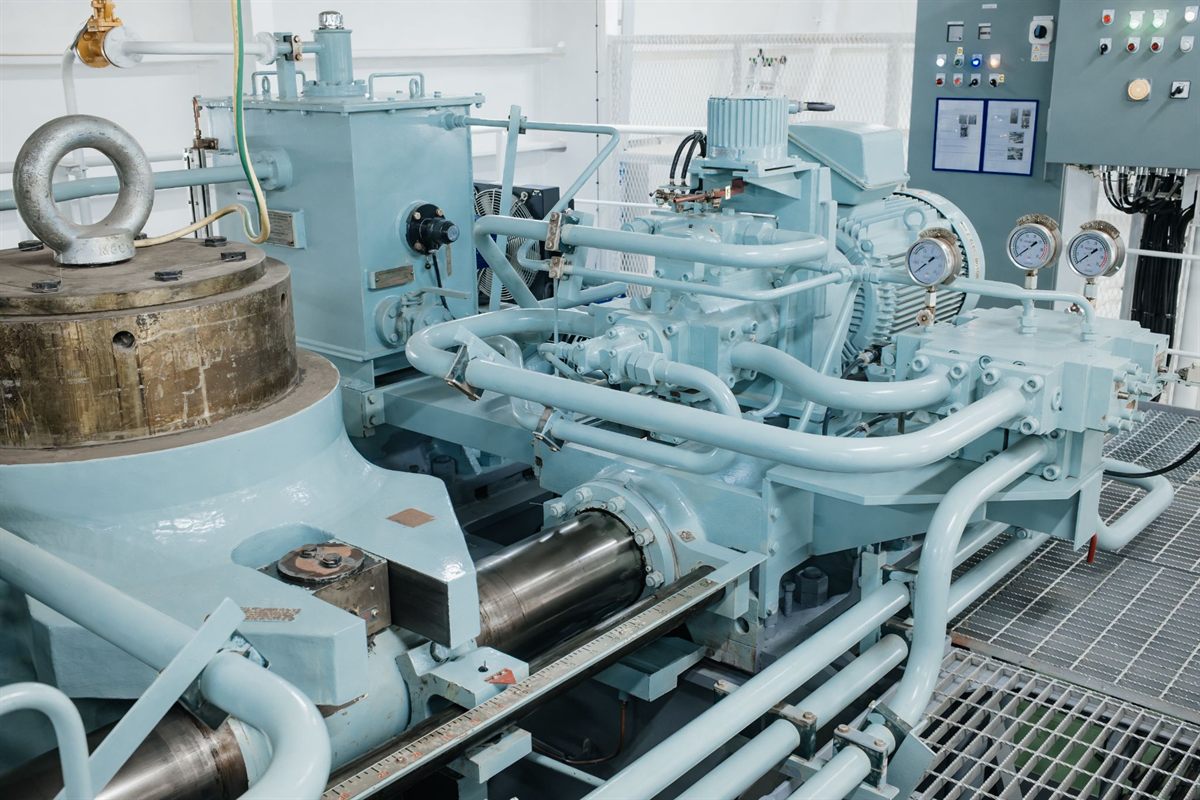
How Hydraulic Pumps Are Identified
Every reputable pump carries a nameplate or stamped code, and reading it correctly is the difference between a one-call replacement and a week of guessing. The pump nameplate typically carries the manufacturer name, a model or part number, a serial number, and often the displacement and pressure rating. The model code matters most, because manufacturers encode the pump's series, displacement, shaft type, port configuration, rotation, and sometimes the pressure setting directly into the sequence.
Here is what to capture before you source a replacement:
| Identifier | What it tells you | Why it matters |
|---|---|---|
| Manufacturer and series | Who built it and the product family | Narrows the catalog and cross-reference |
| Model or part number | The full configuration code | Pins down the exact variant |
| Displacement (cc/rev or in³/rev) | Volume moved per revolution | Sets flow at a given shaft speed |
| Shaft and mounting | Spline or keyed shaft, flange type | Determines whether it bolts up |
| Port configuration and thread | Size, type, and location of ports | Determines plumbing fit |
| Rotation | Clockwise or counterclockwise | A reversed pump will not perform |
If the nameplate is painted over, corroded, or missing, the shaft, flange pattern, port layout, and physical measurements can still get you to an identification, and that is where the help of a distributor who sees these pumps daily pays off. Snap clear photos of the pump from several angles, measure the shaft and ports, and send the photos to the HSC technical team for help identifying the unit.
When a Serial Number Is Worth Keeping
On piston and variable-displacement pumps, the serial number can matter as much as the model code. Manufacturers revise internal components across production runs, and a rebuild kit or a cross-reference sometimes hinges on knowing which generation you have. Record the serial number along with the model code, especially on older units built before a brand changed hands, such as legacy Eaton and Vickers pumps, which now fall under Danfoss Power Solutions.
When Brand Matching Is Critical
Not every job demands an exact brand match, and it helps to know which situation you are in.
For a straight OEM replacement on a machine still under warranty or running a tight factory spec, match the brand and model code exactly. The equipment builder chose that pump for its flow, interface, and control behavior, and substituting a different brand can void coverage or throw off the circuit's balance.
For a repair or rebuild, staying with the original brand usually makes rebuild kits, seals, and internal parts easy to source and keeps the pump's known performance intact. A quality in-house rebuild can often restore a pump to spec at this stage rather than forcing a full replacement. Hydraulic Supply Company's hydraulic repair and service team works on pumps as well as motors and cylinders.
For a new build or a performance upgrade, you have more freedom. If you are designing a power unit from scratch, you can select any brand whose pump meets your flow, pressure, efficiency, and control needs, then build the rest of the system around it, and HSC's HPU Build Program can help put that unit together. A cross-brand substitution is reasonable here as long as you verify every interface: shaft, flange, ports, rotation, and displacement. Skipping any one of those checks defeats the purpose, because a pump that matches on three of five dimensions is still the wrong pump.
The rule of thumb: the closer you are to an existing machine's original design, the more brand matching matters. The closer you are to a clean-sheet build, the more you can optimize on performance and availability instead.
How Hydraulic Supply Company Helps You Source the Right Pump
Sourcing a pump moves fast when the counter can answer questions. A distributor that stocks reputable brands across gear, vane, and piston designs, and backs that inventory with people who can read a model code, cuts a long search down to a short one. You leave with a part that fits instead of a list of maybes.
Hydraulic Supply Company carries recognized pump brands from leading hydraulic pump manufacturers and keeps ready-to-ship inventory in a central distribution center feeding local solution centers with counter service. As a Danfoss Premier Elite Partner, HSC is authorized to sell genuine Danfoss hydraulics, including Vickers products. When the exact pump is not on the shelf, the team cross-references the model code, identifies a correct equivalent, or sources it, rather than leaving you to decode the nameplate alone. For shops that need to speak to someone in person or drop off a unit, the network of local solution center locations puts that expertise within reach.
A hydraulic pump performs only as well as the match between its brand, its type, and your application. Capture the full nameplate, know whether your job demands an exact match or allows a substitution, and lean on a distributor who can verify the fit before the part ships. Do that and the pump becomes the reliable part of the circuit instead of the recurring problem.
Need a specific pump identified or cross-referenced? Browse HSC's product catalogs or contact the HSC team with your model code, and the technical team will help confirm the right unit before you buy.
Frequently Asked Questions
Which Hydraulic Pump Manufacturers Do OEMs Usually Spec?
Equipment builders tend to spec the brand that owns their duty cycle. Excavators and other high-pressure machines often run Kawasaki or Bosch Rexroth piston pumps, while gear-pump duty on mobile and agricultural equipment commonly goes to Casappa or Permco. Parker Hannifin and Danfoss Power Solutions, which absorbed the legacy Eaton and Vickers lines, show up across nearly every application. The right brand for a replacement is whichever one the machine was engineered around.
How Do I Calculate the Flow From a Hydraulic Pump?
Multiply the pump's displacement by its shaft speed. For displacement in cubic inches per revolution, gallons per minute (gpm) equals displacement times revolutions per minute (rpm), divided by 231. For displacement in cubic centimeters per revolution, liters per minute equals displacement times rpm, divided by 1,000. A 20 cc pump turning at 2,000 rpm delivers a theoretical 40 liters per minute, or roughly 10.6 gpm, and real-world output runs slightly lower because of internal leakage.
What Are the Signs of a Failing Hydraulic Pump?
Common warning signs include a whining or knocking noise that was not there before, actuators that move slower than normal, oil running hotter than usual, and difficulty reaching or holding system pressure. A leaking shaft seal can also point to pump trouble. Whining often traces back to cavitation from a restricted suction line, so check the inlet, fluid level, and filters before condemning the pump itself.
How Do I Cross-Reference a Discontinued Eaton or Vickers Pump?
Start with the full model code and serial number stamped on the old unit. Danfoss acquired the Eaton hydraulics business, including Vickers, in 2021 and still sells many of those pumps under their original model codes as Vickers by Danfoss, though some older variants have no direct equivalent and need a dimensional match on shaft, flange, ports, and displacement instead. A distributor that carries the Danfoss catalog can confirm the current equivalent and tell you whether rebuild parts are still available for your generation.
What Type of Hydraulic Pump Is Most Efficient?
Piston pumps offer the highest efficiency and handle the highest pressures, which is why they run on excavators and presses. Axial piston designs are the most common type, while radial piston designs are typically the most efficient of all. External gear pumps are the least efficient but the most affordable and contamination-tolerant. Vane pumps fall in between, offering quieter, smoother operation for steady industrial duty.
Why Does Hydraulic Pump Rotation Matter?
Rotation defines the direction the shaft turns, clockwise or counterclockwise, viewed from the shaft end. A pump installed with the wrong rotation will not prime or build pressure correctly and can be damaged quickly. Always confirm rotation on the model code before ordering, since many pumps are built in both configurations.
How Do I Know Which Pump Is Right for My Application?
Start with required flow and pressure based on your actuators and cycle times, then pick a pump type suited to the duty: gear for simple mobile work, vane for steady industrial loads, piston for high pressure. Match the brand's strengths and interface to the machine, and confirm the spec with a technical supplier.

Share on Facebook

Share on X

Share on Pinterest
Quick Add Product
Account Summary
Short Code:
Credit Limit:
Current Balance:
Recent Posts
Tell us what you need and we'll get back to you.
Fields marked * are required.
Thanks — your inquiry's on its way